
What is the Greatest Commandment?
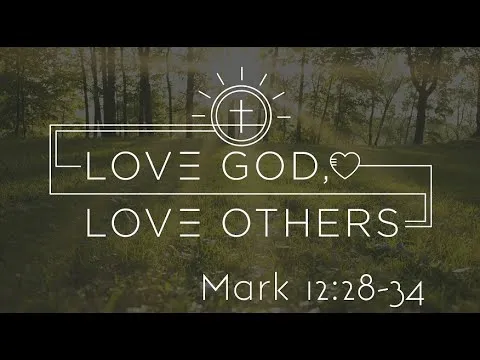
What is the Greatest Commandment? Thirtieth Sunday in Ordinary Time Year A (Matthew 22:34–40) Homily delivered by Fr. Gilbert “Nono” Levosada, SJAnticipated Sunday Mass, 24 October 2026Cenacle Cebu Spirituality Center My dear friends, St. Augustine once said, “Love, and do what you like.” Notice that he did not simply say, “Do what you like.” He said, “Love, and do what you like.” Love changes everything. When our hearts are filled with genuine love, our actions begin to reflect that love. In today’s Gospel, Jesus gives us the very heart of the Christian life. When asked which commandment is the greatest, he answers with two commandments: “You shall love the Lord your God with all your heart, with all your soul, and with all your mind.” And the second is like it: “You shall love your neighbor as yourself.” Jesus brings together two commandments that we might be tempted to separate: loving God and loving our neighbor. First, we cannot love God without loving our neighbor. The Pharisees were familiar with hundreds of commandments. They knew the importance of prayer, worship, and religious observance. But Jesus reminds them that the whole law can be summed up in love of God and love of neighbor. Why does Jesus connect the two? Because our love for God must become visible in the way we treat other people. In the First Reading, God reminds the Israelites to care for strangers, widows, orphans, and the poor. Their cries must not be ignored. Religious observance is not enough if we remain indifferent to those who suffer. Jesus makes this even clearer when he says in Matthew’s Gospel: “Whatever you did for one of the least of these brothers and sisters of mine, you did for me.” When we feed the hungry, accompany the lonely, care for the sick, defend the vulnerable, and reach out to those who are excluded, we are not simply doing good deeds. We are loving Christ himself, present in our brothers and sisters. And this love is not limited to people who are kind to us, who share our opinions, or who can do something for us. Christian love also reaches out to those who are difficult to love. That is why love of God and love of neighbor cannot be separated. We cannot claim to love God while closing our hearts to the people whom God loves. Second, to love others, we must learn to accept ourselves as people who are loved by God. Jesus says, “Love your neighbor as yourself.” At first, this sounds easy. After all, do we not naturally care about ourselves? We worry about our needs, our appearance, our reputation, and our future. Yet many people secretly struggle with feelings of inadequacy. They compare themselves with others, seek approval, and try to prove their worth through possessions, achievements, or social status. Sometimes, beneath all these efforts is a simple fear: Am I good enough? Am I worthy of being loved? When we do not accept ourselves, we can become overly concerned about what others think of us. We may spend so much energy protecting our image that we have little time or freedom to attend to the needs of others. But genuine self-love is not selfishness. It means recognizing ourselves as we truly are, with our strengths and weaknesses, and trusting that we are loved by God. We do not have to earn God’s love by being perfect. God loves us first. His love is a gift. When we begin to accept that love, we become more secure and more generous. We no longer need to use others to prove our worth. Instead, we become freer to listen, forgive, serve, and care. To love our neighbor as ourselves, then, is to recognize that our neighbor, too, is a person loved by God, with the same dignity and worth that we ourselves possess. Finally, our love for God grows as we experience and share his love. Sometimes, it is easy to say, “I love you, God,” but difficult to know what that love really means. If God remains merely an abstract idea—the Creator of the universe or the giver of commandments—it can be difficult to love him with our whole heart. But God does not remain distant from us. Very often, we experience his love through the people who care for us: our parents, friends, teachers, companions, and those who stand beside us in difficult moments. Through their kindness, patience, forgiveness, and generosity, we catch a glimpse of God’s love. And when we extend that same love to others, we become instruments of God’s presence in their lives. In the end, these three loves—love of God, love of neighbor, and love of self—are inseparable. They belong together because they all find their source in God, who is love. My dear friends, perhaps the question we should ask ourselves today is not simply, “Do I love God?” It is also: “Can the people around me experience God’s love through me?” Can my family experience it through my patience? Can my colleagues experience it through my fairness and respect? Can the poor and the excluded experience it through my compassion? Can those who have hurt me experience it through my willingness to forgive? We do not always need grand gestures to love. Sometimes love begins with listening, offering a word of encouragement, forgiving an offense, visiting someone who is lonely, or noticing a person whom everyone else ignores. These ordinary acts become extraordinary when they flow from the love of God. So let us return to the words of St. Augustine: “Love, and do what you like.” When we truly love God, when we learn to accept ourselves as his beloved children, and when we recognize his presence in our neighbors, love becomes more than a commandment. It becomes a way of life. May the Lord give us the grace not only to speak of his love, but to experience it deeply and share it generously with everyone we