
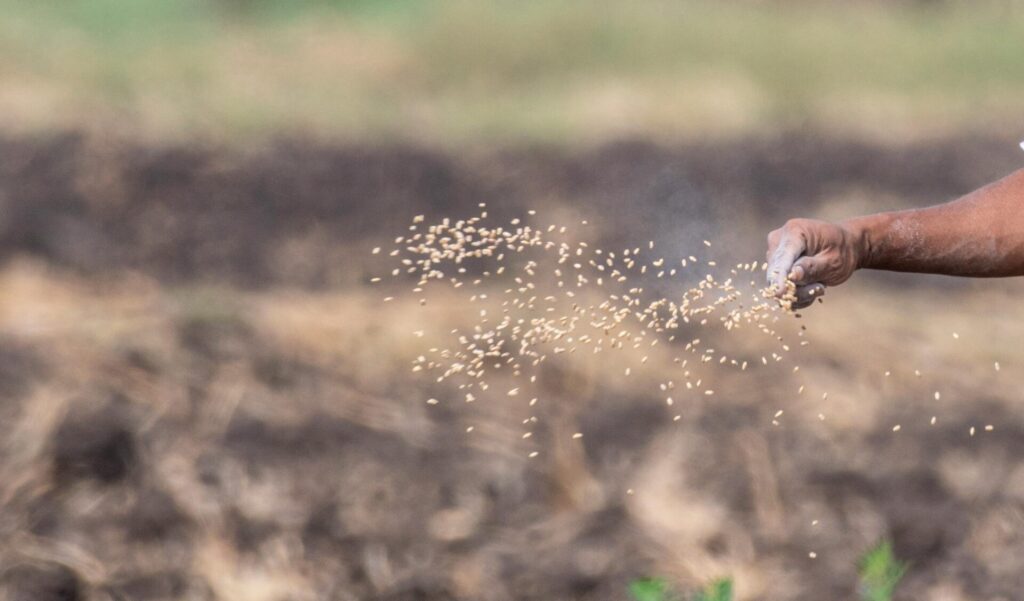
The Sower
The Sower Homily delivered by Fr. Mamert Mañus, SJ11 July 2026 | Anticipated Sunday Mass | 15th Sunday in Ordinary Time (Isaiah 55:10-11; Psalm 65:10, 1. 12-13, 14: Romans 8:18-23; and Matthew 13:1-23) If there is one thing that unites all four readings today, it is this: God is quietly at work. Not loudly. Not dramatically. Not in ways that always capture our attention, Rather, like rain falling upon the earth. like seeds disappearing into the soil, like a child growing unseen in the womb, God is accomplishing something that we often cannot yet see. That is perhaps one of the hardest lessons of faith. We live in a world that prizes immediate results. We expect instant messages, instant answers, instant success. We measure our efforts by what we can see and count. Yet the kingdom of God follows a very different rhythm. The prophet Isaiah gives us a beautiful image. Rain and snow fall from heaven. They do not return without watering the earth, making it fertile and fruitful. So it is with God’s word. Once God speaks, something begins to happen. We may not notice it immediately. We may even think nothing has changed. But beneath the surface, life is already stirring. The rain never argues with the ground. It simply falls. Quietly. Faithfully. Patiently.So too does the Word of God. Jesus develops that same image in the Gospel. We often hear the Parable of the Sower as a question about ourselves; “Which kind of soil am I?” That is certainly a valid question. But perhaps before asking about the soil, we should first look at the sower. There is something almost surprising about him. He scatters seed everywhere – on the path, among the rocks, into the thorns, and on good soil. Any experienced farmer would probably shake his head. Good seed is precious. Why waste it on places where it cannot possibly grow? Yet Jesus deliberately tells the story this way because he wants us to see something about God. God is astonishingly generous. He does not wait until the soil is perfect before sowing. He does not ration his grace to those who deserve it most. He scatters his Word freely, abundantly, extravagantly, trusting that somewhere, somehow, it will take root. Perhaps that is how God has treated each one of us. None of us came to God because we were already perfect soil. We have all had seasons when our hearts were distracted, wounded, resistant, or crowded by anxiety and fear. Yet God never stopped sowing. He never stopped believing that his grace could still find a place to grow. That is good news-not only for us, but also for anyone who has ever wondered whether their own efforts have been in vain. I imagine that many of our dear Cenacle Sisters know this feeling well, Religious life is, in many ways, a lifetime of sowing. Through prayer, teaching, accompaniment, hospitality, and countless hidden acts of love, seeds have been planted in hearts over many decades. Often, the fruits are never fully seen. Students move on. Families relocate. Ministries change. People forget the names of those who quietly shaped their lives. The same is true for parents, leachers, neighbors, caregivers, and friends. So much of love consists of sowing seeds whose harvest we may never witness. And that can be discouraging. We begin to ask ourselves, “Did anything I did really matter?” Saint Paul speaks directly into that uncertainty. He tells us that al creation is groaning as in labor pains. Notice his image carefully. Labor pains are not signs that life is ending. They are signs that new life is about to begin Paul does not deny the suffering of the world. He knows its hardships well. But he invites us to see them differently. Beneath all the struggles, disappointments, and uncertainties, God is still bringing forth something new. The work of God is often hidden before it becomes visible. That is how seeds grow. That is how rain nourishes the earth. That is how children are formed in the womb. That is how grace transforms a human heart. Perhaps this is also why today’s Psalm overflows with joy. The valleys are clothed with grain. The hills shout for gladness. Everything sings because everything has discovered that fruitfulness ultimately comes from God. Not from our efficiency. Not from our cleverness. But from God’s quiet fidelity. There is a beautiful connection here with the vocation of the Cenacle. The first disciples gathered with Mary in the Upper Room after the Ascension. To anyone looking from the outside, nothing remarkable seemed to be happening. There were no crowds. No miracles. No great achievements. Only a small community praying together in hope. Yet beneath that silence, God was preparing Pentecost. The Upper Room itself became fertile soil. The Cenacle reminds the Church that waiting is not wasted time. Prayer is not inactivity. Hidden fidelity is never fruitless. Some of God’s greatest works begin in places that seem unnoticed by the world. The same is true of our own lives. Some of the most important things happening in your family, your community, your ministry, or even in your own heart may still be invisible. A word of forgiveness. A quiet prayer. A simple act of kindness. A conversation that seemed insignificant. A lifetime of faithful service. These are seeds. We do not always know where they fall, nor how they grow. But God does. Perhaps that is the invitation of today’s readings: not to become obsessed with counting the harvest, but to remain faithful in the sowing. Because the harvest has always belonged to God. I would like to leave you with one final image. When we walk through a forest, we admire the great trees stretching toward the sky. We rarely stop to think about the tiny seeds that disappeared into the earth many years before. Those seeds are no longer visible. They have, in a sense, given themselves away so that life might flourish.
