𝐓𝐡𝐞 𝐂𝐞𝐧𝐚𝐜𝐥𝐞: 𝐅𝐨𝐮𝐧𝐝𝐞𝐝 𝐨𝐧 𝐭𝐡𝐞 𝐫𝐨𝐚𝐝 𝐨𝐟 𝐩𝐢𝐥𝐠𝐫𝐢𝐦𝐬
𝐖𝐡𝐚𝐭 𝐧𝐞𝐞𝐝𝐬 𝐝𝐨 𝐲𝐨𝐮 𝐧𝐨𝐭𝐢𝐜𝐞 𝐚𝐫𝐨𝐮𝐧𝐝 𝐲𝐨𝐮, 𝐚𝐧𝐝 𝐡𝐨𝐰 𝐦𝐢𝐠𝐡𝐭 𝐆𝐨𝐝 𝐛𝐞 𝐜𝐚𝐥𝐥𝐢𝐧𝐠 𝐲𝐨𝐮 𝐭𝐨 𝐫𝐞𝐬𝐩𝐨𝐧𝐝 𝐰𝐢𝐭𝐡 𝐩𝐫𝐚𝐜𝐭𝐢𝐜𝐚𝐥𝐢𝐭𝐲, 𝐜𝐨𝐦𝐩𝐚𝐬𝐬𝐢𝐨𝐧 𝐚𝐧𝐝 𝐠𝐞𝐧𝐞𝐫𝐨𝐬𝐢𝐭𝐲?
The Cenacle was born from a response to a need of pilgrims.
In 1825, nearly three decades after the French Revolution, the mission reached Sablieres. Fr. Stephen Terme was entrusted by the bishop with caring for the tomb of St. John Francis Regis in Lalouvesc, supporting the pilgrimage, and evangelizing the surrounding area. Thérèse, only 20 years old had just returned from her studies, met Fr Terme and felt called to join the mission, a major shift in her young life.
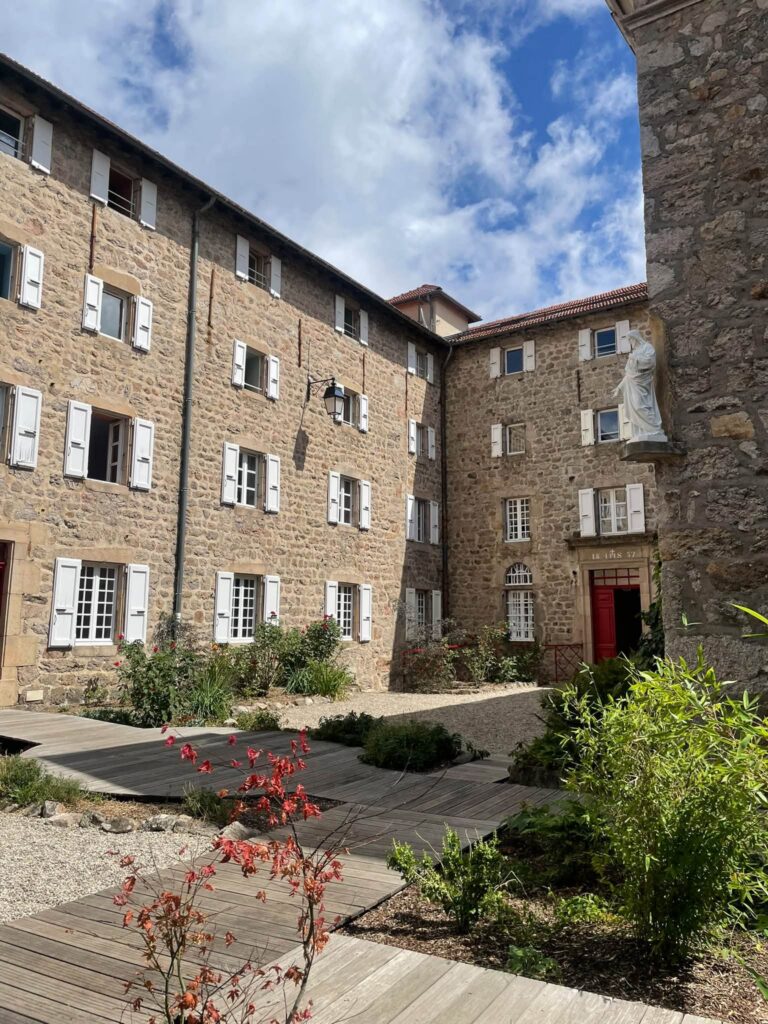
Seeing the need for a safe place for women pilgrims to stay, Fr. Terme and Thérèse opened a house near the tomb of Saint Regis on June 16, 1826, the feast of the Jesuit saint, to welcome and shelter them. Fr. Terme cared for their practical needs, while Thérèse accompanied them spiritually.
From this simple act of welcoming and noticing, the Cenacle was born: a place where people could find shelter, companionship, and spiritual accompaniment.