
Author name: webweaver

Features, General, Updates, Updates and Activities

The Gift of an International Experience: Faith Alive!

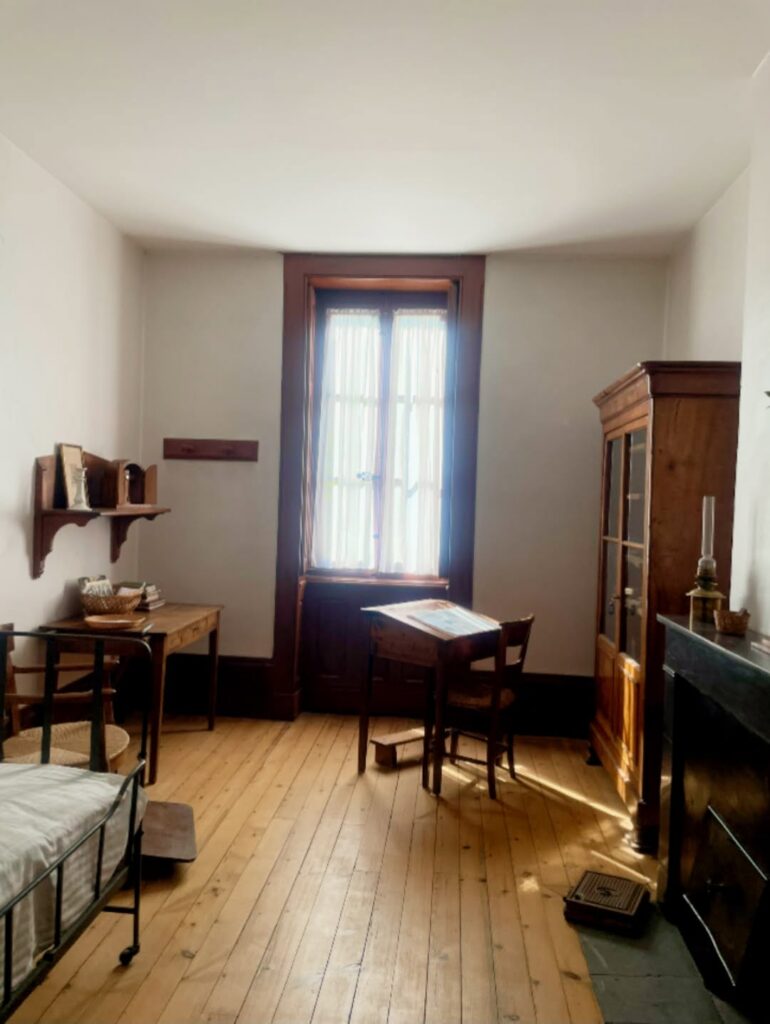
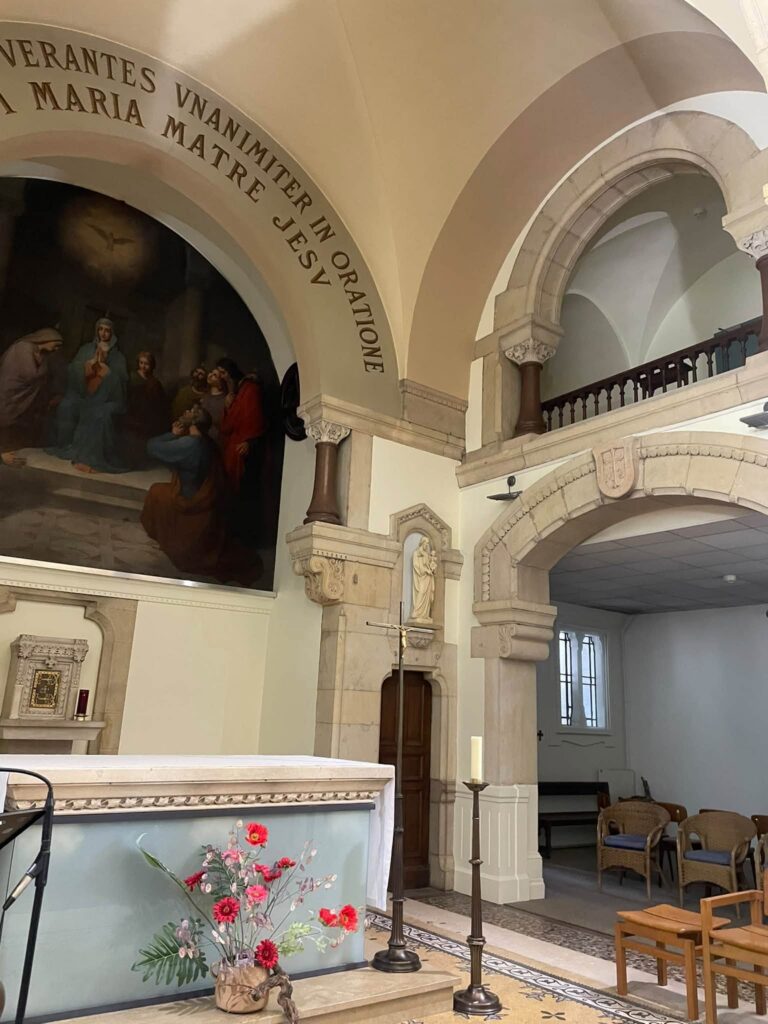
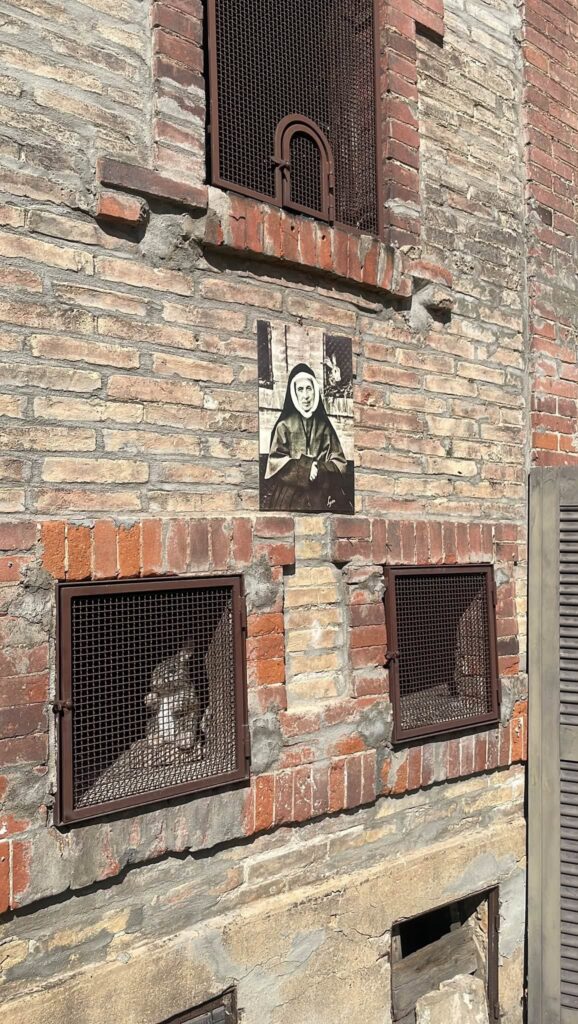
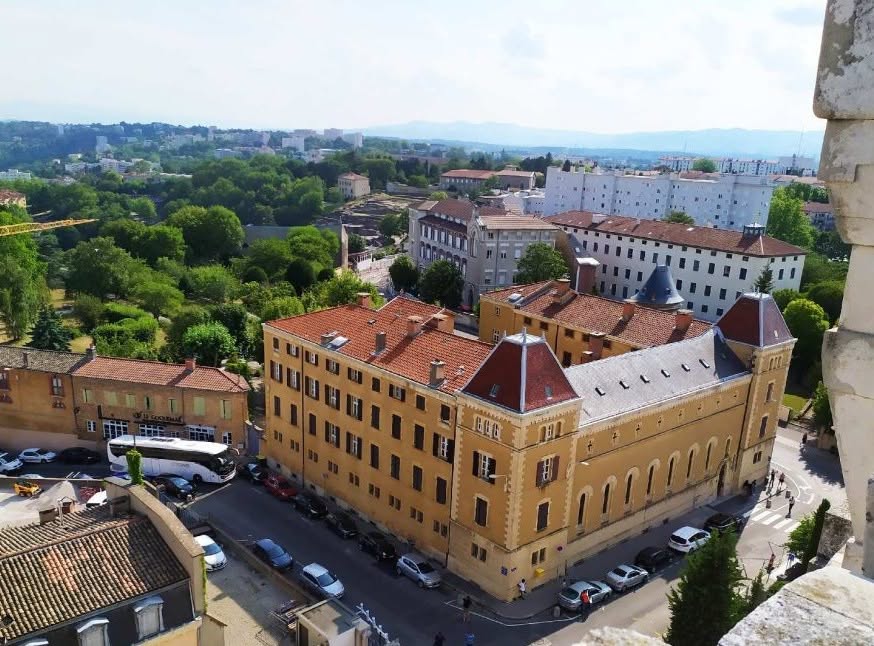
The Gift of an International Experience: Faith Alive! A Reflection by Sr. Xiaowei Li, rc A particular aspect of formative experience prior to my final vows, that of living with a Cenacle community outside of my region, had to be postponed due to the pandemic. I was glad that it was finally possible to do so in September of 2025 and that I would be with our Sisters in Kremlin Bicêtre (KB for short). These are some highlights that stay with me. Living interculturally – challenges and joys Just when I thought that I was already living in a multicultural community in Cebu, the Sisters in KB community also come from diverse cultural backgrounds – different parts of France, Togo and Madagascar. I was certainly challenged to understand French better (and with different accents too!). Thankfully, the Sisters adapted to my lack of the language and would often check on my understanding and translate or speak English with me.  I was happy to have also been included in the community meetings and to participate in the common life of the community. Knowing that I would need Asian ingredients, I was introduced to the Asian food stores in Paris. All the Sisters in KB cooked really well (and really fast)! It was challenging for me to learn to keep up, but I enjoyed myself sharing some Asian dishes and tasting cuisines of different origins too. One aspect of life in the community that struck me was the way in which the community expressed hospitality. I experienced several times in which the community had welcomed their collaborators, friends, parish dormers and neighbours for a meal. I also find such grace and joy to witness not just the creativity among the Sisters, but also the support that the Sisters show to each other and adapt to one another. Despite my poor language skills, I felt at home and deeply grateful to have experienced the Cenacle in KB.  Accompaniment I am thankful that I also had the opportunities to share time and meals with the other communities in and around Paris, and Lyon! Something which moved me very much was the various moments when the Sisters would offer to accompany me to the train stations (for fear that I might get lost) or to visit various places. For someone who had been so used to being independent and going alone, such experiences stand out for me. I felt thankful for these gracious and sincere gestures – they not only assured me that I do not have to walk alone, they also showed me that they are one with me.  Celebrations It was providential that my time in France coincided with various celebrations and occasions for gatherings. A few days after I arrived, the community had an outing to La Ferme de Gally to mark Sister Yoanna’s 40th birthday. We welcomed a Togolese postulant soon after. We then joined the Montmartre community for the celebration of the Feast of Mother Thérèse with the Sisters from Versailles community. I was also happy to get to meet 2 Sisters from the UK at the celebration.  I was able to attend the 10th anniversary mass of the Créteil diocese Cathedral, Notre Dame de Créteil. The diocese had existed since 1966 but the new Cathedral building was erected in 2015. It was an architectural and engineering marvel that there are absolutely no columns inside the cathedral! (Click here to see/know more.) Beyond just a celebration of the construction of a building, the event had also highlighted how alive the faith of the diocese was with an outreach exhibition showcasing the various movements, organizations and groups in the diocese. Encounters I also had various opportunities to go with and observe the KB Sisters for some of their apostolic services which included spiritual accompaniment/ formation and youth ministries in the Créteil Diocesan Center and in the Jesuit-run Magis Network, catechism to children and other involvements at the Holy Family Parish and at St. Ignatius Church, and with various lay groups (eg. Faith and Light, Fidei), etc.  Among those encounters, some of the young adults had left an impression on me – it was a joy to witness their openness and to hear their faith experiences, their passions and questions about faith and life. I was happy to hear that there is a growing number of catechumens in Paris and a number of them are young people! My time in Paris also coincided with the end of the summer holiday which also marked the beginning of the apostolic and school year.  There was such a burst of activities for young people in Paris! The mass for students at the biggest Church in Paris (St. Sulpice) was packed with 3000 students! There was also a 3-day evangelical Mission Congress that was organized by lay missionaries and Catholic/Christian communities (eg. Emmanuel, Chemin Neuf) in Paris. I was able to attend the youth gathering at the Accor Arena on its final evening with Sister Nathalie. The stadium was filled and the young people (ahem, as well as the young at heart) spent an evening of praise, of listening to testimonies through various forms and an input. The program also included a time of adoration and they even had a round of ‘holy game’ of judo between 2 Christian judokas before they came up on stage to be part of a panel of sportsmen and women for an interview. Apparently, the theme of the evening was ‘Fight the good fight’. (Click here to watch on youtube.). Despite not being able to understand most of what was said, the energy and excitement of faith among the participants were certainly palpable! I was also rather struck by how eager the various institutions and movements were to organize outreach exhibitions and open house during that time. These were opportunities to share about their ministries and to attract participants.  I was also happy to hear that some parishes in Paris are able to provide lodging and pastoral care to students/workers from outside Paris. I

Homilies, Homily, Soul Food

Insane

Insane 7 March 2026 | Homily delivered by Fr. Arnel Aquino, SJ on the Third Sunday of Lent (Anticipated Mass) I don’t know if you also did this back when you were a kid. But I remember, I would go and repeatedly open the refrigerator 3, 4 times in one afternoon, on the off chance that there was something new in there I could eat, even when I knew there wasn’t. I was already a priest when I read that doing the same thing over and over again and expecting different results was a classic definition of insanity. From how Jesus described the woman of Samaria at the well, it looked like she was doing the same thing over and over again, expecting a result, different from her 5 failed marriages. But she wasn’t insane. Like Jesus pointed it out to her, this poor woman kept carrying an “empty jar,” a thirst that seemed unquenchable, an emptiness.  As you probably know, sisters and brothers, the village well also served as a casual gathering place at the time (like today’s sari-sari store, barberya, basketball court beside the barangay). Incidentally, it was also typical that great people met their future spouses there; like Isaac and Rebekah, Jacob and Rachel, Moses and Zipporah. Meeting at the village well eventually became a literary type, a poetic genre, for marriage in the Bible. If today, “once upon a time” marks the beginning of a fairy tale, back then, “boy-meets-girl-at-the-well” marked the beginning of a love story. But alas, no matter how repeatedly the Samaritan woman drew from the village well for another love story, she wasn’t any less thirsty than last time around. Five husbands. Maybe she was widowed. Or maybe her husband divorced her (women could not file for divorce). Maybe her dead husband’s brother married her (like the Law required), but maybe, he died, too, or, well, divorced her. Whatever the reason, for a woman to go from husband to husband didn’t necessarily mean she was a libertine, a loose woman. She was, after all, betrothed 5 times! Rather, this was a woman who must’ve suffered hard blows from life. She must’ve asked herself constantly what was wrong w/ her, why this curse. Because unless a woman was wedded to a man, she was incomplete, she felt worthless. So, there was nothing wrong w/ the woman at the well. Even if she repeatedly did the same thing but ended up “manless” anyway, her head was in the right place. She was not covetous and insatiable. But her heart was restless. The chauvinistic dictate of culture made her believe that unless a husband filled her life, she was just an empty jar. I’m sorry, sisters and brothers. I need to be honest w/ you. When I prayed over this beautiful story this year, I couldn’t help contrasting the woman to our thieving politicians. I know. This sounds like a curve ball. But unlike the woman at the well, the thirst in our “representa-thieves” seems unquenchable. Unlike the woman, they’re not victims. They’re just deep-down greedy and shameless about being greedy. Their wells are already brimming over! But because they’re morally bankrupt, they want more. And they will get at that more regardless if it takes away from people who have next to nothing in life, whose jars are never full. The heart of the woman at the well felt empty. I can’t say the same thing for thieving politicians. Because they’re heartless. Jesus’ kindest words set the woman free and rejoicing. She told everyone, “Come see the man who told me everything that I have done. Could he be the Christ?” To me, that sounds like, “Come and see the Savior who told me that I am complete in God’s eyes. I am enough as I am.” Jesus made her realize she didn’t need yet another husband to complete her. Funny that Jesus asked for a drink but it was the woman who ended up quenched and refreshed and sparkling! She was enough in the Father’s eyes. Being enough is already grace. Enough is already a blessing. Sisters and brothers, our hearts are always restless. I’m afraid they’ll remain that way until, well, until God fills us w/ glory when our time comes. Meanwhile, it is very human that our hearts desire for more in this life: more comfort, more healing, more harmony and warmth and peace. But sometimes, greed and shamelessness poison our well. Then, we hallucinate that our well is almost empty, even when it’s still darn full. So, we want more: more self-gratification, more excitement, more novelty, more power and control, more likes, follows, subscribes, and all for the self. All for the ego. “I don’t care how I get at that more, or whom I steal it from. If I can’t have more, life is empty.” So: must… have… more. I mean, the sheer insanity of it all, sisters and brothers. We often think of the season of Lent as a time of subtraction of our extras, a time of reduction of our excesses, don’t we? Maybe, Lent isn’t just about giving something up, but also waking up; like that splash of cold water on our faces, God making us realize that enough is already a blessing. In fact, we have more than enough. But when we share our “enough” w/ people who barely have any, then, we feel even fuller; overflowing w/ life-giving water, overflowing w/ Christ! Really, sisters and brothers, even before we toss the bucket into the well, God has already filled us to the brim, and many times over. So, in a world that shouts that it is never enough, never enough, may we rest in Jesus who assures us and says, enough is already a blessing. Enough is already grace. Finally, did you ever read that meme that says, “If you have food in your fridge, clothes on your back, a roof above you, a bed to sleep in, you are richer than 75% of the world.” I found out, 75% is exaggerated. More accurately put: if

Features, General, News & Announcements, Updates, Updates and Activities

Courtesy Visit with Archbishop Albert Uy

Courtesy Visit with Cebu Archbishop Albert Uy Sr Linda Lizada, rc and Sr Malen Java, rc had a courtesy visit with our 5-month old archbishop, Abet Uy. It was a very friendly exchange, recalling his Cenacle connection when he was a student-priest in Loyola School of Theology and he would say Mass in Barangka and the retreat house in Quezon City. He fondly remembers Sr. Lily Quintos, rc who was his mentor. 

Features, News & Announcements, Updates, Updates and Activities

Cenacle Sisters – Asia | Regional Assembly 2026

Cenacle Sisters – Asia | Regional Assembly 2026 The Annual Assembly was held from 2-6 February 2026 attended by all the Sisters. On behalf of the Cenacle Sisters, Sr. Linda Lizada, rc, offered a message of gratitude to Fr. Roger Champoux, SJ, who has been a “Kintsugi artist” to many Cenacle Sisters for over 40 years. Fr. Champoux was the resource speaker during the recently concluded Regional Assembly. “I would like to thank you for how you have been present in our lives through the many years. And borrowing the inspiration from our Bicentennial theme, I think you have been God’s Kinsugi artist who have worked with us. Many of us have felt that artist’s touch that is like the Kinsugi master. You are our Kintsugi artist. In our prayer last Sunday, we said that our small congregation, now entering its third century, may be part of the world’s journey toward wholeness. We will not be around and you will not be around when Cenacle celebrates 300 years. But what we’re hoping for is that those who do celebrate it will look back to this time and say: because Father Champoux walked with the Cenacle Sisters, we have something that we can rejoice about. Thank you Fr Champoux from all of us!”

Features, General, News & Announcements, Updates, Updates and Activities

Cenacle Bicentenary Launching Ritual

𝐂𝐥𝐚𝐲 𝐚𝐧𝐝 𝐆𝐨𝐥𝐝: 𝐊𝐢𝐧𝐭𝐬𝐮𝐠𝐢 𝐑𝐢𝐭𝐮𝐚𝐥 (This ritual was held right after the Launching Mass on 1 February 2026.) In this ritual, as we offered our prayers for the shattered parts of our world, we did not simply repair the broken jar. We reassembled it, piece by piece, as a visible sign of our prayer. Each prayer became a petition for God’s healing grace—the sacred gold—to mend a specific rupture in our human family. As one Cenacle Sister read a prayer, another placed a broken piece onto the jar. Each action represented a particular form of brokenness in our world: •⁠ ⁠For War-Torn Areas •⁠ ⁠For Refugees and Migrants workers •⁠ ⁠For Our Common Home •⁠ ⁠For the Displaced •⁠ ⁠Against Structural Injustices and Abuse of Power We continue to pray for our ruptured world, trusting that our fractures can become vessels of grace, resilience, and beauty. We are invited not to turn away from brokenness, but to face it with hope and to see in every fracture a potential vein of gold, and in every wound an invitation to healing.

General, Homilies, Homily, Soul Food

Memorial of Saint Paul Miki and Companions, Martyrs

Memorial of Saint Paul Miki and Companions, Martyrs Homily delivered by Fr. John Chong, SJ Today we commemorate the Twenty-Six Martyrs of Japan. When persecution began in January 1597, twenty-four people six foreigners, fifteen Japanese Franciscans, and three Jesuits-were forced to march from Kyoto through various regions all the way to Nagasaki (850 km). The intention was to warn the people that this would be the fate of anyone who believed in Catholicism. Along the way, there were two companions. When officials asked them whether they were Catholics and they answered that they were, they too were added to the procession, bringing the total to twenty-six. On February 5, 1597, they were crucified on a hill overlooking the city of Nagasaki, where Catholicism had been most flourishing. In Japan, February 5 is observed as the feast of the martyrs. However, in the General Roman Calendar, since it coincides with the memorial of Saint Agatha, their feast is celebrated on February 6. As we offer this Mass, let us honor the faith of the martyrs who gave their lives for their belief. With gratitude for our own faith, let us renew our commitment to live it more faithfully. In Shusaku Endo’s novel “Silence”, various methods of torture are described. Victims were branded with hot irons, their limbs were cut off with saws, and boiling water from sulfur springs was poured over their bodies. Some were put to death by crucifixion, as the Twenty-Six Martyrs were, while others were tied to crosses set up along the seashore, where they drowned when the tide came in. One particularly brutal method of torture, known as ana-tsurushi, involved binding the entire body with ropes and suspending the person upside down in a pit. A small hole was made in the forehead or temple so that blood would drip out slowly, causing death over time. During this period of persecution, many believers fled to the Philippines or Macao, while others went into hiding in various parts of Japan, concealing their faith as they struggled to survive. The Christians who lived in hiding were called Hidden Christians, or Kakure Kirishitan. For nearly two hundred years, they preserved the faith handed down from their parents, holding on to it in hope and waiting for the day when freedom would be restored. About three hours by ferry from Nagasaki lie the Goto Islands. They are breathtakingly beautiful. To think that such a tragic history unfolded in a place of such beauty reminds us of the deep irony of human life. On the Goto Islands, there are fifty mission stations. From just one of these parishes, it is said that two bishops and an entire busload of priests and sisters have emerged. At last, in 1865, the Japanese government permitted religious freedom in order to engage in trade with Western nations. When Missionaries with white beards appeared in Nagasaki, the people recognized them. Just as they had been told by their ancestors, they asked three questions: Do you honor the Blessed Virgin Mary? Do you marry? Do you follow the liturgical calendar? When the answer to all three questions was “Yes,” they declared, “Our hears are the same as yours, Father.” They then asked where the statue of the Blessed Virgin was. When they were led to her statue, they knelt down and prayed, it was the moment when the chains of two hundred years were finally broken. Now it is our turn. We are living in a world very different from theirs. What, then, can we learn from the martyrs? I have reflected on three points. First, the martyrs make it unmistakably clear that our faith is not a hobby or a mere decoration of life. They testify that faith can be a value so serious that it is worth one’s very life. Do you agree with this? Giving a testimony for justice and right, it means death as shown in today’s Gospel. Let us ask ourselves honestly. Second, the martyrs died not only to defend their faith, but also to uphold human dignity and the value of conscience. Human conscience is an inviolable domain. By laying down their lives, the martyrs bore witness to the truth that every human person possesses the freedom of conscience. Again, we find a good example in St. John, the Baptist. Third, The martyrs bore witness to their love for God and neighbor even in the face of persecution. They were in a situation where there was no other choice. Their fundamental motivation was not a hatred of the world or of life, but a profound love for God, for others, for life itself, for conscience, and for human dignity. Likewise, if we love God, our neighbors, and life, and respect conscience and human dignity in our daily lives, we live in unity with the martyrs. Let us, today. give thanks to the martyrs and strive to put love into practice in our own lives.

Uncategorized

The Reward of Waiting

The Reward of Waiting Homily delivered by Fr. Herbie Santos, Parish Priest of Our Lady of Pentecost Parish, on the Feast of the Presentation of the Lord | 2 February 2026 Today is a grace-filled convergence of celebrations. We mark the Feast of the Presentation of the Lord, the World Day of Consecrated Life, and the Bicentenary of the Congregation of Our Lady of the Cenacle. All three speak with one voice about waiting, light, and fulfillment – about lives shaped by attentiveness to God’s timing and God’s presence. In the Gospel, Mary and Joseph bring the Child Jesus to the Temple. It is an ordinary act of obedience, but within that simple moment, God fulfills promises made long ago. Simeon and Anna, who have waited for years, finally see what their hearts have been longing for. This scene beautifully mirrors the charism and long history of the Cenacle Sisters, whose mission is to help others listen, discern, and recognize God quietly at work in their lives. For our reflection on today’s readings, allow me to share with you three points for your consideration. The first point is this: Waiting is part of what God wants to teach us. Simeon and Anna teach us something very important today: waiting is not wasted time. Simeon is described as someone who was “righteous and devout, awaiting the consolation of Israel.” Anna spent decades in prayer and fasting in the Temple. Neither of them rushed God. Neither demanded answers. They trusted that God would fulfill His promise – in His time. In the first reading from Malachi, we hear about the Lord coming suddenly to His Temple. But before the coming, there is purification, preparation, and refining. God works slowly, deeply, and patiently. You, my dear Cenacle Sisters, understand this well. Your ministry of spiritual direction and retreats is built on teaching people how to wait with God – to listen, to sit with questions, to resist the pressure to rush decisions or force clarity. In retreats, people often arrive anxious, wanting immediate answers. Yet what they discover is that God often speaks in silence, over time, gently shaping the heart like a potter shaping a clay jar. Waiting purifies our desires. It teaches us humility. It trains us to trust. What feels like delay is often God deepening our capacity to receive. And so it is good to ask ourselves, “Am I tired of waiting? How can I see the good things God is doing to me while I wait?” The second reflection point is this: The only way to recognize the “Light of the World” in our own lives is through constant prayer and worship. Simeon recognizes Jesus immediately – not because of outward signs, but because his heart had been trained by prayer. Anna recognizes Him too, because she never left the Temple, worshiping day and night. Their eyes could see what others missed because their lives were anchored in God’s presence. Simeon proclaims Jesus as “a light for revelation to the Gentiles.” But light must be received by eyes accustomed to it. Without prayer, the light of Christ can pass right in front of us, unnoticed. This is where your mission, dear Cenacle Sisters, shines so beautifully. Through retreats and spiritual accompaniment, you help people cultivate an inner attentiveness – to notice movements of grace, to recognize when God is drawing near, to discern His voice amid the noise of daily life. You remind us that prayer is not an accessory to life; it is what allows us to recognize Christ when He comes to us in unexpected ways. In a world full of distractions, constant prayer and worship are not luxuries. They are necessities if we are to see clearly. And so it is good to ask ourselves, “How do I ensure that I recognize Jesus when He enters into my life?” The third and last reflection point is this: To accomplish what God asks us to do is to live a life that is full and with no regrets. After seeing the Child Jesus, Simeon says one of the most moving prayers in Scripture: “Now, Lord, you may let your servant go in peace.” He can say this because his life is complete. He has done what God asked of him! Anna, too, spends the rest of her days speaking about the Child to all who were awaiting redemption. This is the peace that comes from fidelity – not from a life without hardship, but from a life lived in alignment with God’s will. Two hundred years ago, the Congregation of Our Lady of the Cenacle was founded with a simple but courageous response to God’s call. Over generations, Cenacle Sisters have dedicated their lives to helping others encounter God, discern His will, and live with purpose. And now, dear Sisters, your lives remind us that fulfillment does not come from doing everything, but from doing what God asks of us. A life lived in obedience to God may not always be easy, but it is a life that can say, at the very end, “I am at peace.” And so it is good to ask ourselves, “What is it that I still need to do in order to be at peace and ready to meet my Creator?” My dear sisters, today we give thanks for the witness of consecrated life, for the quiet fidelity of Simeon and Anna, and for the 200 years of grace given through the Congregation of Our Lady of the Cenacle. May your loving example teach us how to wait well, pray deeply, and live fully – so that when we meet the Lord, we too may be at peace. Amen!

Scroll to Top