Homily

Homilies, Homily, Soul Food

The Rich Man and Lazarus

The Rich Man and Lazarus Brothers and sisters, tonight we celebrate the 26th Sunday in Ordinary Time. The Church also dedicates this Sunday to seafarers and migrants. Today, this Saturday, is also the birthday of Saint Alphonsus, the founder of the Redemptorists, and the anniversary of the Province of Cebu, which in the future will become the Province of the Philippines. Maybe tonight is also our last Mass together, as a batch, for tomorrow we will be dispersed to our respective ministry. We are so grateful for the past two weeks, especially to our facilitators, because we have learned so much- from the elements of faith, to religious experience, and from religious experience to discernment. And from discernment to being aware of AI, and from AI to the need of supervision. All of these are very important and must be considered in spiritual direction. Through these, I have come to appreciate even more the art of listening, not only the importance of listening to someone, but also of listening to oneself, and of discovering together what God is telling us, to see what God is doing in our lives, self-awareness as sometimes call it, because all of these come from our desire to be with God and to follow his will. For me, this is a daunting task. In the ministry of spiritual direction, as we have already heard, we cannot separate our very selves from the ministry. As much as we ask the person to see God in their life, so much more are we called to see God in our own personal life. We are supposed to see God first, before we can help others see Him in theirs. We cannot split our being from what we are doing. We cannot pan for gold unless we know what gold is. Only then can we truly journey with the person that we accompany. This is our calling: to journey with others. In today’s Gospel, we hear the story of Lazarus. Jesus tells the story of the rich man and Lazarus. The rich man lived in comfort, eating and drinking every day. Just outside his gate lay poor Lazarus, hungry and covered with sores. Dogs even came to lick his wounds. But the rich man never cared and was never bothered. He was indifferent. He never had the intention, or even the willingness, to help, to touch the wounds of Lazarus, much less to listen to Lazarus. In other words, for him it was none of his business. But for us, especially us religious and priest, it is our business: to feel what others feel and to see what others see. If we truly love one another, we cannot remain indifferent. We are called to be neighbors to everyone especially the poor. I hope we can also offer spiritual direction to poor people. This means taking responsibility for the needs of others and being able to listen to the silent plea of their hearts, to their deep desire to connect with God. I remember an experience from my childhood. There was a little girl in our neighborhood left alone by her parents. My aunt noticed that it was already lunchtime and the parents had not returned. The child simply stayed in their house, in their veranda, waiting. It was getting late, maybe around 2PM, and my aunt was sure she was hungry. So my aunt called the child into our home and offered her food. I will never forget that girl, on how she devoured her food. Though shy, as obviously as she was, she ate it all the food my aunt offered to her.  She was able to escape hunger that day because of my aunt’s simple act of care and kindness. My aunt didn’t preach, she didn’t explain anything to me, but her actions pointed me towards God. And that is what Jesus is asking of us: to see, to feel, and to act. Even small gestures of concern can save someone from pain, hunger or loneliness. So, it is good to reflect on these brothers and sisters. How are we as neighbors to our fellow human beings? Do we help them? Are we always available to them? Do we share our precious time with them? Human as we are, we know that we cannot perfectly give ourselves to others. But God continues to challenge us: it is by giving that we receive; it is by offering ourselves that we experience perfect love just like the song we sang yesterday. I was a little sentimental yesterday when we sang that song. It was my aunt’s favorite song. She often sang it when I was a child, which is why I’m so familiar with it. As we continue this Holy Eucharist, let us pray for hearts that listen, hearts that hear the quiet cries of those around us and the gentle voice of God within us. As mentioned in our morning prayer, spiritual direction doesn’t end here. It is a continual process of learning, listening, and discernment as we seek God in the algorithm of our soul. Amen. Homily delivered by Fr Ritchie Cuaton, CSrRAnticipated 26th Sunday in Ordinary Time27 September 2025Holy Family Retreat House, Busay, Cebu

Homilies, Homily, Soul Food

To Die To Self

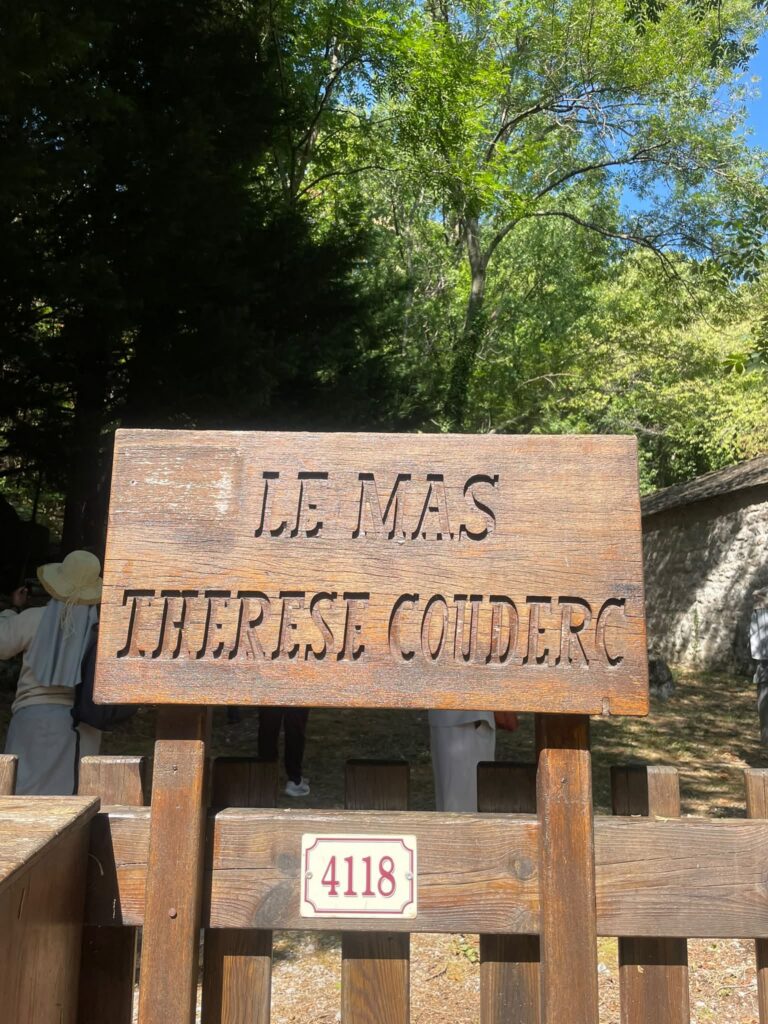
TO DIE TO SELF Homily delivered by Fr. Miguel Gaspe, CSsr on the Feast of Saint Thérèse Couderc, co-founder of Cenacle SistersHoly Family Redemptorist Retreat House, Busay, Cebu City26 September 2025 A common thread in the stories of most religious founders in the history of the Church is their shared religious experience.   It can be experienced through immense joy and gladness. Yet, we also know that even in times of trial and challenge, God’s presence can still be felt. When Therese Couderc was forced to resign from various positions in the Congregation due to false accusations against her, she saw this as an opportunity to hold to her faith and trust in God. It is in these encounters of “deaths” that she was raised to “life”. From this experience, she made the most of it as an opportunity for personal growth and in the mission she was called to serve. “A grain of wheat that falls to the earth must die to bear fruit.” This is a profound example that Jesus uses to help his disciples understand what it means to follow him. One has to die to self. What does it mean to die to oneself? To die to self is the ability to delve deeper into one’s being, confronting one’s own strengths and weaknesses, while allowing God to penetrate the heart and mind. From this movement, a renewed self emerges, putting behind perspectives that are no longer helpful in our journey. A renewed self that nourishes life around him. In the past few days in the workshop, we have been taught about the skills required in conducting spiritual direction (SD). However, as we progressed, what we were taught was not only the “hows” of doing SD, but also the “being” of becoming a spiritual director. Later, we realize that to grow in the spiritual life is an experience of a never-ending cycle of discovery, reflection, and surrender. One has to surrender, has to encounter death if one desires to live life to the fullest.  May the spirit of our holy founders and confreres continue to inspire us in the work of bringing all people closer to God. Amen.

Homilies, Homily, Soul Food

Me Save

Me Save My friend JM is the only person I know whose full name is “JM.” His dad named him Joseph Marlow. But when he abandoned the family, JM’s maternal lolo had his name legally changed to just “JM.” JM works as a janitor in a McDonald’s. He hits the road at 5am every day, rain or shine, baha or more baha. He moves frozen stuff from the freezer, first thing, & sets them down near the stoves. Then, all day long, he mops the floor, clears tables, & washes & washes & washes dishes. The other janitor is slack, he says. He leaves a heap of dirty dishes by the sink before break-time, but never helps JM wash them after the break. But my friend takes it all in silence every day. All in silence. JM has 2 dreams, his “tower,” let’s say. First, he wants to buy a small house where his wife & his 12-year-old son can live. But because that’s not going to happen anytime soon, his 2nd dream is to buy a small, portable keyboard for his son. The kid sings in church & has shown increasing interest in the piano. Every Saturday night, JM walks him to choir rehearsals at the nearby chapel. JM is proudest, though, when the kid sings solo at the responsorial psalm on some Sundays. He always takes a picture & sends it to me. JM has told me many times: “Me save. Me buy piano for son.” Yes, he says it like that. “Me save. Me buy piano for son.” He says it w/ his hands. JM was born deaf. He doesn’t know what a song or a piano sounds like. But one day, “me buy piano for son.” JM’s tower, sisters & brothers: a small house & a portable keyboard.  Our Gospel today continues the story where a Pharisee invited Jesus for a meal. Jesus saw how guests picked places of honor at the table, the upper crusters. So, he finally said, “Which of you wishing to construct a tower doesn’t first calculate how much it’ll cost to complete it? Otherwise, after laying the foundation, but running out of money to finish the work, onlookers should laugh at you & say, ‘This one began to build but didn’t have the resources to finish.’” Maybe, the shorthand in Tagalog could be: “’Yan. Ang tayog kasi ng lipad.” Whenever I think of JM, of course I compare his life to that of the contractors & so-called public “servants” who infuriate us these days. All these years, imagine how they’ve been living off of the tired & sweaty backs of honest, hard-working people like JM; their all-expense-paid life. “How much higher do you want those towers to go?” I really want to ask them. “Kulang pa ba? How many more cars, mansions, ‘Jet-2 getaways’ will you steal for? How many more bags, shoes, clothes, jewelry do your children need to show off before they begin to feel important? Kulang pa ba?!” And where & how do these people think all this will end? Saan ang katapusan? If there are some of you here, sisters & brothers, who are friends or relatives w/ the people I’m talking about, can you ask? Tell them you’re asking for a friend. How do they think all this will end? Because there is an end. From what Jesus taught us, we either spend this life giving back, or spend the next life paying back, until we’ve “paid the last penny.” For 300 years from the first Pentecost, Christianity was forbidden under pain of death by crucifixion, burning, or feeding to wild animals. Following Jesus was virtually a death wish; suicidal, if you want. So, imagine how someone deciding to follow Jesus would run afoul even of his own family. That line: “If anyone comes to me without hating his father, mother, wife, children, brothers, sisters, & even his own life, cannot be my disciple”? That line reminds me of an unico hijo friend. When he finally broke it to his rich parents that he wanted to be a priest, his father said, “You might as well kill me if you’re just going to be a priest.” How families must’ve pleaded w/ their children back in the day, dissuading them from joining this underground movement that Jesus started. I could hear the parents say, “Why are you doing this to us? Do you hate us? You love this Jesus more?” Today, though, we hear scheming contractors & “public servants” even utter Jesus’ name & lovingly. But discipleship doesn’t have anything to do with it at all. Haven’t they noticed, even from history alone: not all the money in the world will ever finish monuments of avarice & deception. Like termites through the toughest wood, fate & retribution will eat away, slowly & patiently, at every foundation laid in greed & fraud. Just when they think they’ve topped the tower, the flawed foundation will have begun to fissure. JM’s “tower” is modest enough. I hope he sees it through, sa awa ng Diyos. The little dream house might not come anytime soon, not on a McDonald’s salary. That portable keyboard, though, that one’s doable. “Me save,” he says. “Buy keyboard for son.” Imagine the day when JM sees his son play the keyboard he brings home w/ great love, & sees him play a psalm & sing it. Sweet, sweet music only a deaf father’s heart can hear. Loud & clear. Homily delivered by Fr. Arnel Aquino, SJ23rd Sunday in Ordinary TimeCenacle Retreat House6 September 2025

Features, General, Homilies

Primerea

Do you miss Pope Francis? What do you remember most about his teachings or words of wisdom? I recently read his autobiography titled Hope: An Autobiography, and there found an interesting lesson from Pope Francis. Dios nos primerea. God is always ahead of us. It is actually part of the deep Argentinian or Latino Catholic Christian faith. It is based on a vision from Ezekiel. As the winter season begins, the prophet sees the almond tree and observes that among the trees in the forest, it is the first to bloom and bear fruit. It symbolizes God, writes Pope Francis, who is always ahead of us, always first, always leading us. Even when we sin, God is already waiting for us; like the Prodigal father, he is ahead in waiting for our return. Dios nos primerea. I remember this principle because today the beautiful and very touching story of Joseph the dreamer ends. We have been following this very human story for a week now. The drama ends today. With the death of Jacob, the patriarch, the brothers who envied Joseph and maltreated him, panicked. They thought finally Joseph would exact vengeance upon them. But Joseph had really forgiven them and told them that everything that happened was God’s will. God, he said, meant it for good, to achieve his present end which is the survival of many people. Indeed, as economic minister of the whole of Egypt, Joseph saved the kingdom from famine. Dios nos primerea. God was ahead of Israel; and even the crime that the brothers committed against Joseph was mysteriously part of God’s plan for the chosen people. The Gospel puts it in another way: divine providence. Jesus teaches that there is nothing to fear because God provides for everything that we need. “Even all the hairs of your head are counted,” he says. “So do not be afraid; you are worth more than many sparrows.” Like a mother or a father, God already knows what we need and provides for them. Dios nos primerea. He is always ahead of us. The legendary Ateneo High school teacher, Mr Onofreo Pagsanghan or Pagsi for short, shared that when he and his wife was newly married, they would spend days planning for the future of their family. Once, they brought up where to build a home. At that time, this was still wilderness but it was the closest to the Ateneo. They thought it would be very convenient for them, since Pagsi was teaching at the school . all he had to do was cross the street and Ateneo would be there. And if they had children, the boys would also conveniently just cross the road as well and attend school; and for the girls, they would just cross the street then walk left to go to Maryknoll. Good thinking, they said, and settled down at Esteban Abada. He was so impressed by how the plan worked out well. And then it dawned on him how we humans are so good at planning our future: we buy life insurance plan, health insurance, educational plan, etcetera. Despite our limitations—we cannot see the future—we rely so much on our capacity to prepare for the future. And yet, he says, we deny the same faith from God. When crisis happens in our lives—wars, natural calamities, grave illness or death—our faith in God waivers. Surely, he says, God who is omnipotent, omniscient and all loving has prepared a future better than we can ever imagine. As the prophet Jeremiah says, “For I know the plans I have for you, plans to prosper you and not to harm you, plans to give you hope and a future.” Or indeed as the Latinos would simply say, “Dios nos primerea.” God is always ahead of us! Homily delivered by Fr. Emmanuel (Nono) Alfonso, SJSaturday, 12 July 202514th Week in Ordinary TimeCenacle Retreat House

Features, Homilies

Ascension

            I was missing Pope Francis this past week so I went back to videos of his visit to Tacloban. I don’t think any papal visit in our country was as deeply moving as that one. Remember the scenes there? Everyone was in a yellow kapote, wet, & weather beaten including Pope Francis. Walang kaarte-arteng pari. The original plan was for him to say Mass in the comforts of the sacristy. They’d just stream the video out on the giant screens. He wanted nothing of the sort, of course & wanted to be where the people were. In the homily, he spoke in native Spanish rather than officialdom Italian. Ibig sabihin galing talaga sa puso niya ang pakikiramay sa mga sinalanta ng Yolanda. “So many of you have lost everything,” he said. “Many of you lost family. All I can do is keep silence. I walk with you all with my silent heart. Many of you have asked the Lord, ‘why, Lord?’ And to each one, to your heart, Christ on the cross responds from his heart. But I (myself) have no more words that I can say. Let us look to Christ. He understands us because he underwent all the trials that we have experienced.” People who were already teary-eyed with started to cry. I myself was a mess…again. But then, later, I chuckled when the Pope was about to enter the plane back to Manila. A gust of wind whipped the Pope’s zucchetto off his head, like God saying, “Dito ka muna, hoy. Stay longer.” Which, I bet, might’ve been the people’s wish. I mean, it was my wish. And I was just a bystander. When people saw w/ their own eyes that Pope Francis dressed like them, was all wet & weather beaten like them, was silent with them in their suffering & longing, then, they must’ve also felt upon his departure, that he took with him a real part of themselves: a chunk of their hearts, the lump in their throats, the tears in their eyes, the fight in their spirit. And bringing those w/ him, maybe he could bring them all closer to God. Sisters & brothers, when people close to God & close to us depart, & they take with them a share in our being, a part of our lives, we feel hope, don’t we? Yes, we feel sadness. But if you go down deeper, we also feel hope; especially when they’re departing for a much better place than where we are. We hope they never forget us, for one. We hope they will always pray for us. Most of all, we hope they come back & stay with us longer. Or, if we ever make it to that better place where they are, we hope to be welcomed, too. And this time around, we hope we can be together for good. Sisters & brothers, I’ve tried to understand Jesus’ Ascension in this light. Jesus of Nazareth lived, moved, & had his being like us in everything (in everything) except sin. So, when he ascended to the Father, Jesus “took” with him everything like us which he made like himself, “took” with him everything part of us which he made part of himself except our sinning. So, the One who ascends to heaven is deeply familiar w/ how it is being on earth. We can therefore say, “’Yang taong ‘yan na umaakyat patungo sa Diyos, alam niya kung papaanong mabasa sa ulan, kumbaga, kung paanong ginawin sa hangin, bagyuhin ng tadhana, magutom. That One who ascends knows the difference between our joy & our despair & everything else in between, because he crossed that bridge many times himself. The One who ascends values friendship & community, because he chose a bunch of friends & together, they ministered to people who needed them. The One who ascends, alam niya ang pakiramdam ng mayapos at mapasalamatan ng dukha, kasi galing din siya sa karukhaan. At marunong din umibig, kasi labis din siyang minahal at inaruga ng kanyang mga magulang.” As Jesus ascended to the Father, how closely & dearly Jesus held us in his heart. Everything we are, he also was, including our constant need of uplifting, raising, transcending, for cheering up, freeing up, & taking up. If we felt that Pope Francis took w/ him a real part of being “us” as he made us part of himself for a few days, can you imagine what Jesus still carries w/ him to this day? He who was & still like us in everything but sin, he bears in his very being who & what we are. That’s why we say our Lord’s Ascension is not a matter of space: Jesus “up there,” & us “down here.” Rather, it is a matter of depth. The Ascension is our deepest reason to hope that we will not only be raised from death to life, we will also be taken up, lifted up towards God. Through Jesus’ Resurrection, the Lord says, “‘Wag kang mag-alala, wala nang kamatayan.” Through his Ascension, he says, “‘Wag kang mag-alala, wala nang iwanan.”   Homily delivered by Fr Arnel Aquino, SJduring the Anticipated Sunday Mass on the Solemnity of the Lord’s AscensionCenacle Retreat House; 31 May 2025

Homilies, Homily, Soul Food

Where does Easter begin?

Where does Easter begin? I remember a video I once saw on Facebook of an Easter Vigil Mass. There was this impressive setup— there was a cave in the sanctuary, and at the climactic moment during the Gloria, the cardboard stone split open. The Risen Christ emerged, surrounded by flashing, fireworks, smoke, and roaring applause. It was joyful, creative, dramatic. But I found myself wondering: Is that really how Easter begins? If we pay close attention to tonight’s liturgy, we’re invited to experience something very different. We started in stillness and shadow. No lights. Then a small flame. And from that flame, light moved—quietly, steadily—until this space was filled with light. This is not just a ritual. It tells us something essential—not only about Easter, but about how God usually works. God begins in the dark. Luke tells us the women went to the tomb “at early dawn.” John’s version is even more specific: “While it was still dark…” They weren’t going in hope—they were going in grief. They were not expecting resurrection; they were expecting to tend to death. And yet, in that darkness, something new had already begun. The creation account in Genesis starts with, “In the beginning, when God created…darkness covered the abyss.” Barbara Brown Taylor writes: “New life starts in the dark. Whether it is a seed in the ground, a baby in the womb, or Jesus in the tomb, it starts in the dark.” This is not just poetic—it’s a promise. God’s work often begins when nothing seems to be happening. As we heard in tonight’s retelling of the salvation history, time and again God moves at first in hidden ways – during the slavery in Egypt, during the dark days of exile in Babylon. We need to be reminded because it is very easy to forget. We know what that is like to be in the dark. Maybe we are in it now. We may be waiting for answers slow in coming, holding quiet grief, worn down by unappreciated work, wondering if our hopes and prayers matter. We look at the world—its violence, injustice, noise—and feel numb or overwhelmed. So much of life feels unresolved, like we’re eternally stuck between Good Friday and Easter Sunday. And in that in-between, we might think God is absent, because nothing feels dramatic or clear. But again, Barbara Brown Taylor reminds us: “While I am looking for something large, bright, and unmistakably holy, God slips something small, dark, and apparently negligible in my pocket How many other treasures have I walked right by because they did not meet my standards? At least one of the day’s lessons is about learning to let go of my bright ideas about God so that my eyes are open to the God who is.” Dear friends, this is the invitation of this night: To look again. To look more closely. To peer into the dark. To trust that the darkness is not empty. To believe resurrection is already underway. God doesn’t wait for perfect conditions. He doesn’t need spectacle. He starts in the silence. In the soil. In the tomb. In the quiet decision to keep going. In the gentle strength of people who love, forgive, and serve without limelight, or fireworks, or applause. So when we ask: Where does Easter begin? It begins here. In this way. When we least expect or see it coming. Goodness is already at work. New life is already forming. Because God always begins in the dark. And He never leaves us there. Homily delivered by Fr. Jordan Orbe, SJ Easter Vigil  (19 April 2025) Cenacle Retreat House

Homilies, Homily, Soul Food

Homily | 6th Sunday in Ordinary Time

We live in a world filled with uncertainties, shifting values, and fleeting securities. Where do we turn for strength? Today’s readings remind us that to truly flourish, we must be firmly rooted in Christ, drawing from His life-giving grace. Allow me to share three points for prayer and reflection. First, Trusting in God: The Image of a Tree by the Water The prophet Jeremiah presents a vivid contrast: those who trust in human power are like dry, lifeless shrubs in the desert, while those who trust in the Lord are like trees planted beside flowing waters. A tree’s roots anchor it in the soil, drawing nourishment even in times of drought. The Psalmist echoes this image: the one who delights in the law of the Lord is like a tree bearing fruit in due season. The message is clear—when we place our trust in God rather than in passing worldly securities, we remain steadfast even in trials.   Second, the Beatitudes: “BE-attitudes” for Christian Living In our Gospel passage from Luke today, Jesus presents the Beatitudes and gives us guideposts on how to live as His disciples. These are not just promises of future blessings but invitations to embody a new way of life—a way of being. That’s why they are also called “BE attitudes”: ways of being and acting as followers of Christ. – To be poor in spirit is to depend completely on God’s providence rather than material wealth. – To be merciful is to imitate the heart of God. – To be pure in heart is to seek God above all things. – To be peacemakers is to build bridges rather than barriers. Each Beatitude invites us to be deeply rooted in God’s love, shaping how we think, speak, and act. Third and last, being Rooted in Christ: Trusting in His Love Finally, Paul in his letter to the Corinthians reminds us of the foundation of our faith: Christ’s resurrection. Just as the tree draws life from deep waters, so too must we draw life from the risen Christ, who conquered sin and death, that we may have life, and have it to the full. To be rooted in Christ means trusting in His provision, even when life is difficult. It means believing that in every challenge, in every moment of uncertainty, God’s love will sustain us. Like the tree planted by the river, we will never wither when we are nourished by Christ’s life-giving grace. The world tells us to chase security in wealth, power, and comfort. But Jesus calls us to a different way—the way of trust, humility, and love. Yes, we work hard and do our best; kakayod tayo ayon sa pangangailangan. But in doing so, our readings today remind us that everything should flow from God; we are being reminded that everything we do ought to be centered on and rooted in Jesus. The Beatitudes are our guide, our “BE-attitudes,” teaching us how to live as disciples. If we remain rooted in Christ, we will not fear the storms of life, for we draw our strength from Him who is faithful. Blessed indeed will we BE. May we continue to trust in God’s love, knowing that He provides for us…always. Amen.   Homily delivered by Fr. Mamert Mañus, SJ (Anticipated) Sixth Sunday in Ordinary Time Cenacle Retreat House 15 February 2025

General, Homilies, Homily, Soul Food

We Serve as the Lord Serves

We celebrate this Eucharist to mark the transition of Sr. Rose and Sr. Ria’s ministry. Interestingly, we have today’s readings from the Gospel of Mark as we do so. The very first word of the reading tells us a transition of Jesus’ ministry. It tells us that Jesus and his disciples were on a boat, and then opens today’s reading, where Jesus sees a vast crowd as he gets out of the boat. Let us take a closer look at the acts of Jesus and see how we serve God’s people as Jesus’ disciples. First, upon seeing the vast crowd, Jesus was moved with pity and compassion, for they were like sheep without a shepherd. The verb splangizomai in the original Greek is more than just a feeling. It means to be affected from deep within our gut, and we are moved to do something. It is a strong feeling—not just a romantic emotion. And so Jesus was moved to minister to them. Second, the disciples saw the people’s needs; it was already late, and they were hungry. And Jesus said: Feed them yourself. Seeing the needs of the people, Jesus advised his disciples to do something for them. That made the disciples complain that they were helpless with the great need before them. (This may be familiar to us: when we see the great need of God’s people, we feel we cannot do anything or the thing we can do will have little effect on them). And then Jesus asked, bringing us to the third act of the Lord: Third: How much do you have? What do you have? Jesus asks his disciples here not so much to completely fulfill what the people need as to what they can contribute. The disciples were rather self-focused, not knowing that others had something as well, and most significantly, they did not recognize that Jesus could do something more. With the little that they have offered to the Lord, Jesus asked them to group the people. This detail is something that we usually miss. When Jesus asked the disciples to group the people, it was not just about facilitating the distribution of food, but it also signaled to the people that it was time for them to be together, be concerned with one another, and see what they could do for each other. Modern exegetes would say that since the Jews would not go out of their houses without some provisions, this act signaled to them that it was time also to take out the little they could contribute. So, some people would say this miracle is a miracle of sharing. But some won’t accept this explanation. But whether they took out their provisions or not, this action led us to the next act of Jesus. Jesus took what the disciples offered to him, blessed them, broke them, and gave the pieces to the disciples to distribute to the people who were satisfied. This provides us with the imagery of the Eucharist. However, the critical lesson from this act is that no matter how little we have, as long as we offer it to the Lord, He can bless it and appropriate it to meet the needs of His people. As we mark this transition into another phase of Rose and Ria’s journey, into the transition of their ministry, we are reminded today of how we can also do our ministry and follow the acts of the Lord: 1) that we are sensitive to the needs of the people of God; that we allow their situation to affect us, their needs to move us; 2) and hear the words of the Lord, “Feed them yourself,” that is, serve them, minister to them according to what we can as he said, 3) what resources do you have? Even the little that we have can do something or can trigger some great things to happen. But first, we must acknowledge what we have and offer it to the Lord. It is essential that, given the immensity of the demands of the ministry, we must offer first to the Lord what we have and what we can. Then, 4) we allow the Lord to bless our offering and let him do the rest. The works in the Lord’s vineyard will always be greater than us. But as long as we offer the little that we have, God can do greater things for His people. Then we will see that it is His works, not ours; we are only his ministers. Let us pray for the grace to grow in docility to his voice and in the spirit of generosity so that God can continue his saving works in our midst, in our time. God bless us. Homily delivered by Fr. Edilberto “Bert” Cepe, CSsR Tuesday After Epiphany Cenacle Cebu 7 January 2025  

General, Homilies, Homily, Soul Food

The Solemnity of the Lord’s Epiphany

One cold winter morning, three palm fruit farmers were warming themselves by the fireside. Soon two of them were engaged in a heated debate comparing their religions to decide which one was the true religion. Okoro, the oldest among them, sat quietly listening to the debate. Suddenly the two turned to him and asked, “Decide for us, Okoro. Which religion is the right one?” Okoro rubbed his white beard and said thoughtfully, “Well, you know there are three ways to get to the oil mill from where we are. You can go right over the hill. That is shorter but it is a steep climb. You can go around the hill on the right side. That is not too far, but the road is rough and full of potholes. Or you can go around the hill on the left side. That is the longest way, but it is also the easiest.” He paused and then added, “But you know, when you get there, the mill man doesn’t ask you how you came. All he asks is, ‘Man, how good is your fruit?’” In the stories of Jesus’ birth, two special groups of people came to visit the new-born babe: the shepherds and the magi. The church has no special feast to commemorate the visit of the shepherds, but we have this special feast of Epiphany today to celebrate the visit of the magi. Why is that? It is because the visit of the magi is an eye-opener. The shepherds learnt of the birth of Jesus through a direct revelation from angels appearing in the midnight sky. This is direct and supernatural revelation. Many of us have no problem with that. The magi, on the other hand, learnt of the birth of Jesus by observing a star. The star did not say anything to them. They had to interpret this natural sign of the star to know what it meant and where it led. If we remember that the magi or the three wise men were nature worshippers, people who divined God’s will by reading the movements of the stars and other heavenly bodies, then we can see how the visit of the magi challenges some of our popular beliefs. Like the palm fruit farmers, religious people of all persuasions tend to think that their religious tradition is the only way to God. We hastily conclude that the way of God equals the way of our religious tradition. Yet the word of God cautions us against such a narrow interpretation. “For my thoughts are not your thoughts, nor are your ways my ways, says the Lord” (Isaiah 55:8). That is why we are fascinated with the story of the visit of the magi. It is a unique story that opens our eyes to the fact that God is not limited to any one religious tradition. God is open for everyone. Second, notice how people of different religious traditions came to know that the Son of God was born. The shepherds [who were regarded as unclean and could not take part in Temple worship without undergoing purification] came to know through a direct vision of the angels. The magi knew through a reading of the stars. And King Herod’s scribes came to know through searching the scriptures. Visions, stars, scriptures — different ways of arriving at the same truth. Of course, this does not mean that any religious tradition is just as good as the other. Notice how Matthew indicates that when the guiding star got to Jerusalem its light failed, and the magi had to consult the scriptures to direct them to Bethlehem. Over and above the natural light of the star the magi still needed the supernatural light of scripture to finally get to Jesus. Yet the crucial question in the story remains: Who actually got to find Jesus? Herod and his scribes who had the scriptures failed to find Jesus but the magi who followed the natural light of the stars were able to find him. Why? Because the Jewish authorities, even though they possessed the shining truth of revealed scriptures, did not follow it. They did not walk in the light of the scriptures. The magi, on the other hand, who enjoyed only a star light followed its guidance. This fact reminds us that it is not the possession of the truth that matters, it is how prepared we are to walk in the light of the truth that we possess. It is how we make use of the faith that was given us that matters most. It seems better to have the dim light of the stars and follow it than to have the bright light of the Holy Scriptures and neglect it. As Christians we believe that our religion possesses the fullness of truth. But what does that benefit us if we do not walk in the truth? Nature worshippers or non-believers who are sincerely committed to following the dim light of natural reason may also arrive at Jesus before Christians who have the exalted truths revealed by God but who do not walk the walk of faith. This is the challenging truth we celebrate today in the story of these pagan wise men who seek and find the Lord. What leads us to truth is not who we are but what our intentions are. The stars in our life lead us, we make choices on whether to follow them. Thus, it is worth asking ourselves: what are the stars in my life? How and to what is God calling me at this time in my life? Where does he want me to find him, to serve and follow him? This very day, let us stop in our tracks. Obviously, at this stage there are many things which, for better or worse, we cannot change, some decisions, right or wrong, which we cannot now undone. But it is not too late to look for our star and begin following it from where we are now.

General, Homilies, Soul Food

New Year’s Eve Homily

Introduction Isn’t it a bit strange that the Church celebrates the motherhood of Mary on the first day of the year? Have you ever asked that question to yourself? Why, after celebrating advent waiting for the Christ, and Christmas, welcoming the birth of the Lord, the liturgy now goes back to Mary? Isn’t reflecting about Jesus or the Holy Spirit or even God the father, a more appropriate celebration for today, the first day of the year? The New Year in the context of Christmas We may fail to appreciate the real importance and meaning of today’s feast if we don’t look back to what had happened for the past days. Today is the octave of Christmas. [Side notes: There are two very important feasts in the church calendar that are celebrated with octave: Easter and Christmas. These mysteries are of great importance that they are celebrated for eight consecutive days.] What did we celebrate in Christmas? We celebrated Christ’s birth. One Christmas day a couple of thousand years ago, the son of God was born by a woman named Mary who betrothed to a man named Joseph. Their son was named Jesus, was foretold by an angel, who will be Emmanuel, God is with us. And who among us here do not know the story? All of us; we know the details—virgin birth, birth in a manger in swaddling cloths, angels singing, shepherds and kings or magi visiting to pay homage. We as Christians have been telling this story, passing it on from generation to generation. Some things were added to further enhance the celebrations. Santa Clause, gifts and shopping, and food, and many more; sad to admit that sometimes, we focus more on the trimmings rather than on what really is the essence of the story. But what is really the essence of the story? One important fact—that God, in his desire to communicate to us and express his love, spoke through the birth of his son. He had to speak through a son because we can neither see with our eyes nor hear with our ears God. God has to become flesh—incarne—literally to become flesh, so that we may perceive what God wants to say. And the word became flesh so that we may understand. But that happened 2000 years ago. Mary gave birth to the human Jesus on the first Christmas. Last December 25 must be the 2024th Christmas, right? More or less. Today, several thousand years since, God still wishes to communicate to us. Do we need another Mary to give birth to another Jesus? Maybe not the same characters once more, but same story. Jesus still needs to be born. We still need to communicate Jesus to a deaf world, struggling to see and find God. We need to communicate God to everyone more than ever. And it is here where today’s feast becomes significant. I think, more than honoring Mary herself on the first day of the year, we are honoring her motherhood, her theotokos— the mother of God. We honor the birthing, we need to give birth to Jesus. Like Mary, we have to bear and give birth to Jesus wherever we are. Her motherhood is equally a grace and challenge for each one of us. This is the grace we received when we were baptized. In and through our own humanity, we en-flesh—in-carne—the Lord. In a sense, becoming mothers of our Lord and giving birth to him in our midst is a grace we received. This is our grace—we can do it. In our joys and sorrows, we bring that grace to reality. But it is also equally a challenge—it’s not easy to give birth to Jesus, to be a bearer of the Lord. How many times can others really see Jesus in us? How many times are people blessed because of us? We know that it is a challenge and often time we retreat run away when called. And it is particularly significant that if you look back at our celebrations for the past days, the past liturgies tells us the difficulty. On the 25 was Christmas day. The next day, the 26th was the feast of St. Stephen, the first Christian martyr stoned to death. On the 27th was the feast of St. John the evangelist–the writer of the fourth gospel, on the 28th was the celebration of the holy innocents, on the 29th St Thomas Becket–the bishop of Canterbury who was martyred when he stood up against the king and royalty. The eight days of celebration after Christmas was marked my martyrdom. Challenges. One night, I was talking to a Jesuit friend. We entered the seminary together. He said, “No good deeds are left unpunished.” This is the harsh reality of life. This is what motherhood of Mary means; it is by no way reserved only to Mary, we are graced and challenged to be mothers of Jesus too. Mary was the mother of the human Jesus 2000 years ago; you and I are graced and challenged to give birth to the resurrected Christ today, in our midst–in truly loving one another, in forgiveness, in our generosity, in little deeds of charity. Let me end with the lyrics of a song written anonymously entitled The Work of Christmas. Let this remind us of theotokos, the motherhood of God. The Work of Christmas When the song of angels is stilled, when the star in the sky is gone when the kings and princes are home when the shepherds are back with their flock the work of Christmas begins. To find the lost, to heal the broken to feed the hungry free the prisoners to rebuild nations to bring peace among brothers (and sisters) to make music in the heart. May all of us accept the grace and challenge to give birth to the Emmanuel, the resurrected Christ today, in our midst. Amen. Homily delivered by Fr. James Gascon, SJ on New Year’s Eve Mass, The Solemnity of the

Scroll to Top