Homily | Feast of Our Lady of the Cenacle @ Quezon City
Homily delivered by Fr. John Chong, SJ on the Feast of Our Lady of the Cenacle
Cenacle Retreat House
23 May 2026
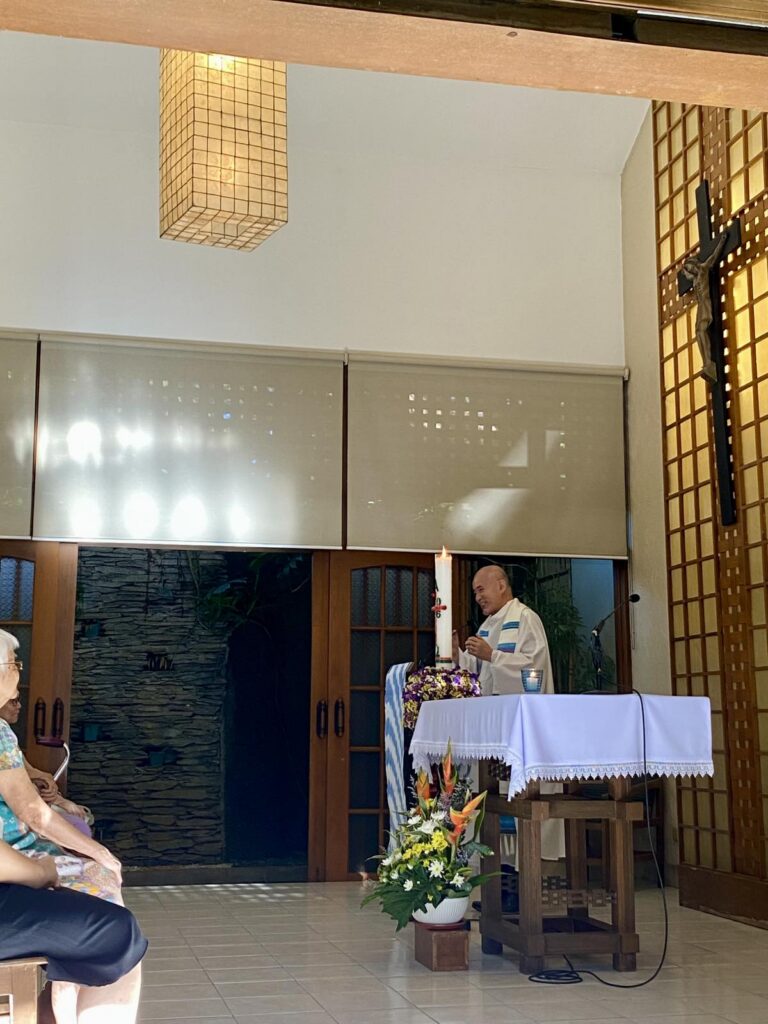
Today is the spiritual birthday of the Sisters of the Cenacle. It is said that Sr. Thérèse Couderc came to a profound realization of the mystery of self-emptying in the contemplation of the Cenacle, the Upper room in Jerusalem. The self-emptying and humility she discovered / meant making space for the Holy Spirit to work, and “believing that God is already at work.” Since the pandemic, we too have experienced once again a sense of God’s absence. After the Ascension of Jesus, the disciples had no choice but to accept His absence. At that moment, they gathered in the upper room, Cenacle and prayed for God’s next activities among them. Like St. Thérèse Couderc, who understood the humility and self-emptying of the Apostles, let us also make room for the Holy Spirit and trust that God is already at work. Through today’s Mass, let us pray earnestly that the grace of humility and self-emptying may be given to all of us.
There are moments in our lives when God seems absent. We pray, but heaven feels silent. We search, but cannot find clear answers. We believe, yet still feel as if something—or Someone—is missing. And yet, the mystery of faith tells us something surprising: what we call “absence” may in fact be a different kind of presence.
Today’s celebration of the prayers in the Upper room, the Cenacle, and the coming of the Holy Spirit leads us into this mystery. It brings us into the Upper Room, a place where silence becomes prayer, and waiting becomes hope.
1. The Ascension: not absence, but a new and fuller presence. The Ascension of Jesus is not simply His departure into the sky. It is not a disappearance. Rather, it is a transformation of presence. Christ is no longer limited by time or space. He becomes present in all places, in all moments, in all human history. We might imagine it this way: like entering a glass elevator that rises higher and higher. The higher we go, the wider our vision becomes. What once seemed separate now appears connected; what once seemed distant now becomes visible in a single horizon. So too with the risen Christ. From the perspective of heaven, nothing is lost. Everything is held. Everything is seen. Everything is present. The disciples, however, experienced this differently at first. They saw His “absence.” But instead of falling into despair, they gathered in the Upper Room —the Cenacle— and prayed.
Their waiting was not empty. It was the beginning of a deeper communion.
2. The Holy Spirit: the One who reveals the hidden traces of God We are people who search for God. But often, God seems hidden. It feels like a divine “hide-and-seek.” We seek, but do not immediately find. We long, but do not always see. And yet, God never abandons us in hiddenness. He leaves traces. He leaves signs. He leaves whispers of His presence in creation, in history, and in the depth of our conscience. But these traces are not always easy to recognize.
This is why Jesus sends the Holy Spirit. The Holy Spirit is the Spirit of Truth (cf. Jn 16:13). He teaches, He reminds, and He bears witness to Christ (cf. Jn 16:14). He does not speak on His own, but leads us into the truth that we cannot see by ourselves. Without the Holy Spirit, God can remain near—but unnoticed. With the Holy Spirit, even the smallest trace becomes a sign of love. In this sense, the Holy Spirit is not distant or abstract.
He is the quiet interior presence who allows us to recognize that we are not orphans, but children of the Father.
3. The Church: renewed in the Upper Room of prayer and waiting The Cenacle—the Upper Room—is not only a place in history. It is a spiritual identity of the Church. It is the place where fear becomes prayer. Where waiting becomes hope. Where absence becomes preparation for new life. After the Ascension, Mary and the apostles did not scatter. They gathered. They prayed. They waited. And in that waiting, the Church was born. Today, we find ourselves in a similar moment. After the pandemic, many communities feel weakened. Church participation has declined. Structures have been shaken. And there is, at times, a sense of loss or even forgetting.
But this is not the end of the story. It may be a return to the Upper Room. Because the Church is not renewed first by strategies or numbers. It is renewed by the Holy Spirit. The Spirit of God is the Spirit of power, love, and self-discipline. He strengthens us in our weakness.
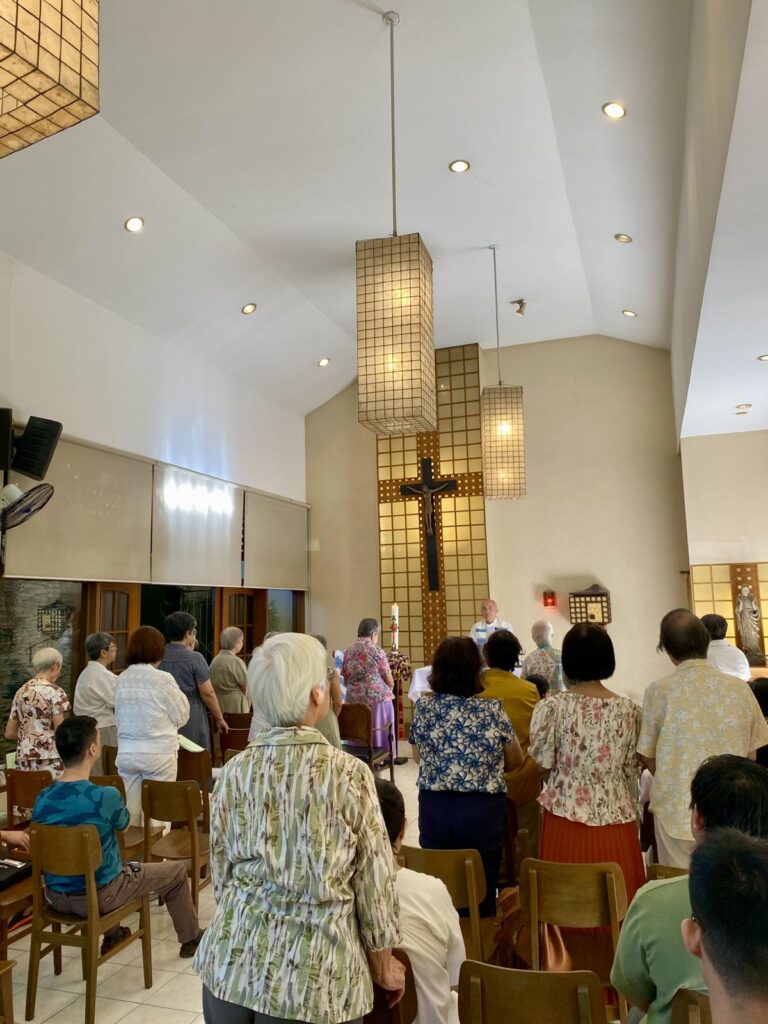
He speaks in our conscience.
He gives courage where there is fear.
He gives hope where there is discouragement.
And He makes us witnesses again.
So today, we stand in the mystery of the Upper Room. We are invited to see differently: what seems like absence is not abandonment. What feels like silence is not emptiness. God is already at work. And the Holy Spirit is given so that we may recognize this hidden work of God. Like Mary and the apostles, we are called to wait—not in fear, but in hope. Not in confusion, but in trust. And like St. Thérèse Couderc, we are invited to humility, to self-emptying, and to the simple faith that God is already present and already acting. So let us return, in our hearts, to the Upper Room. And let us ask once again for the Holy Spirit— to open our eyes, to strengthen our faith, and to renew the Church with His life. Amen.