
Performative
Homily delivered by Fr. Dom Joseph Bulan, SJ
17 June 2026; Wednesday of the 11th Sunday of Ordinary Time Year C (2 Kgs 2:1, 6-4 | Ps 31: 20, 21, 24 | Mt 6:1-6, 16-18)
Cenacle Retreat House
Have you heard of the term “performative”? For the Baby Boomers and the Gen X here today, chances are this might be your first time to hear this word. But for the millennials, Gen Z, and Gen Alpha, you have probably heard this word, “performative” used at least once, if not several times.
Ano nga ba ang kahulugan ng salitang “performative”? Back then, something was considered “performative” when it involves or relates to artistic or theatric performance. So usually, stage actors and actresses, as well as movie stars, would be involved in something performative. But in contemporary times, sa panahon ngayon, the word “performative” has taken on a negative meaning. To be labeled as “performative” means to say or do something to make oneself look good, righteous, or virtuous to an audience. Sa Filipino, may salita rin tayo para rito – “pakitang-tao”. (Mas masakit yatang pakinggan kapag nasa wikang atin).
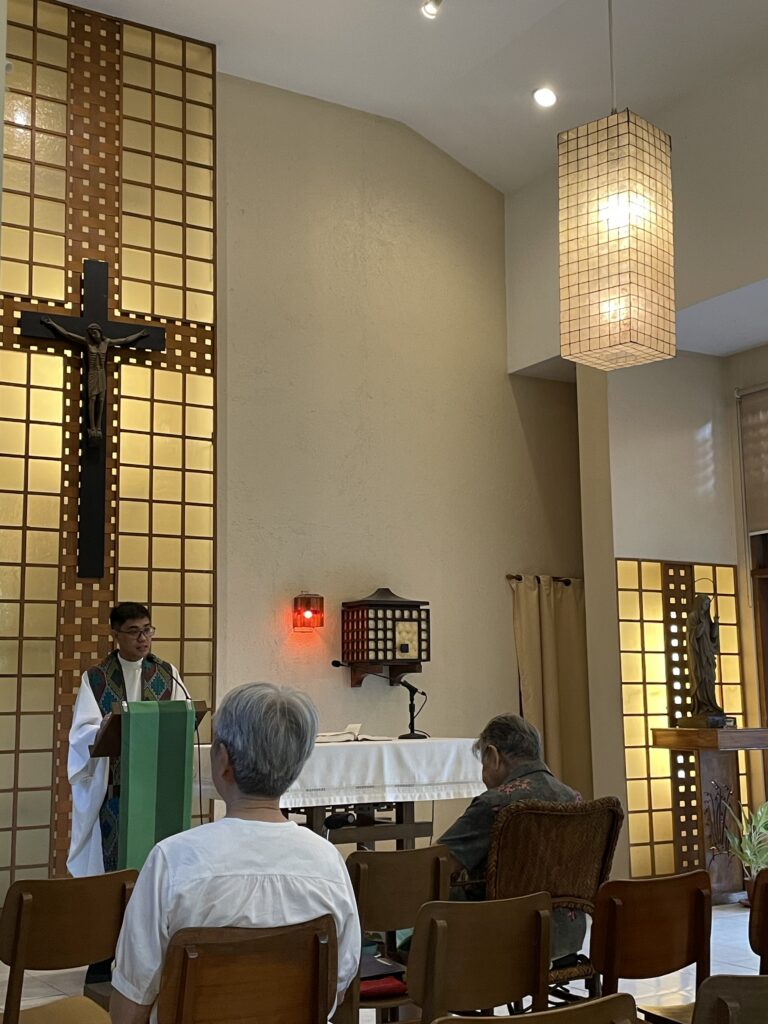
Ang pagpapakitang-tao at ang pagiging “performative” ang nais tumbukin ni Hesus sa ating Ebanghelyo ngayon. In our Gospel today, Jesus warns his disciples about being hypocrites, of doing things merely for show. He says, “When you give alms, do not blow a trumpet before you, as the hypocrites do.” He likewise tells them, “When you pray, do not stand on street corners so that others may see you.” And regarding fasting, he warns them not to put on gloomy faces just to broadcast their sacrifice. In all these, Jesus is pointing to the same temptation: to turn acts that should be directed towards God into performances directed towards an audience. Instead of worshipping God, one begins to worship the approval and admiration of others.
Dear sisters and brothers, within each of us is a temptation to be a “performer” or to be “performative”. We see this in school, whenever a student studies or volunteers for a project, not because it is the right thing to do, but because it will look good on a résumé or impress a teacher. We also see it in the workplace, when someone takes credit for a team’s accomplishment, meticulously crafting an image of competence and success while hiding mistakes and weaknesses. The temptation is not simply to do good, but to be seen doing good.
And yes, this temptation also happens to us priests and religious. Kahit kaming mga pari at mga relihiyoso, natutukso ring magsalita at kumilos upang magmkuhang mabait, katanggap-tanggap, at kapuri-puri sa iba – ika nga ng mga mas nakababata, maging mga cloutchasers. And if I daresay, this temptation is stronger for men and women of the Church. After all, our ministry is public. Here, it becomes very easy to confuse serving God with managing our image before others. Minsan, mas nagiging mahalaga pa ang papuri ng tao kaysa sa katapatan sa Diyos. Minsan, mas nagiging abala pa sa kung ano ang sasabihin ng iba kaysa sa kung ano ang hinihingi ng Panginoon. At minsan, maaari ring mangyari na ginagawa ang tama, ngunit para sa maling dahilan.
There may be many reasons why we fall into the trap of being “performative”, but I believe one of them is a deep insecurity about one’s own sense of goodness and self-worth. ‘Yung tipong dahil sa palagay mo, hindi ka mabuting tao, o hindi ka kamahal-mahal, o hindi ka worth it, kaya sinisikap mong gawin ang lahat para magmukhang ganoon.
But if there’s anything our Lord reminds us time and again, it is this – we do not have to “perform” in front of him; we do not always have to prove that we are worth his love, his affection, his mercy. We do not say good things or do good things to chase clout from the heavens. Hindi tayo nagsasabi at gumagawa ng mabuti para makapuntos sa Diyos. No. As the recent solemnity of the Sacred Heart of Jesus has reminded us, our God is a God of love, and this love has been freely offered to all of us – independent of our worth, of our past, of what we have said and done. Instead, we intentionally choose to do what is right and just as a participation in the goodness and righteousness of God who first loved us.
So, the next time you are tempted to be “performative”, sa susunod na pagkakataong matutuksong “magpakitang-tao”, ask yourself: “If no one were watching me right now, would I still choose to do this?” And perhaps a second question: “Am I doing this because I love God and neighbor, or because I love the praise and approval that may come from them?”

As we continue with our Eucharist, we beg for the grace of sincerity and integrity of heart. May the Lord free us from the need to constantly perform before himself and others. And may he teach us to do what is good, not for recognition or reward, but simply because we have first experienced the goodness of the God who sees in secret and loves us all the same. Amen.