
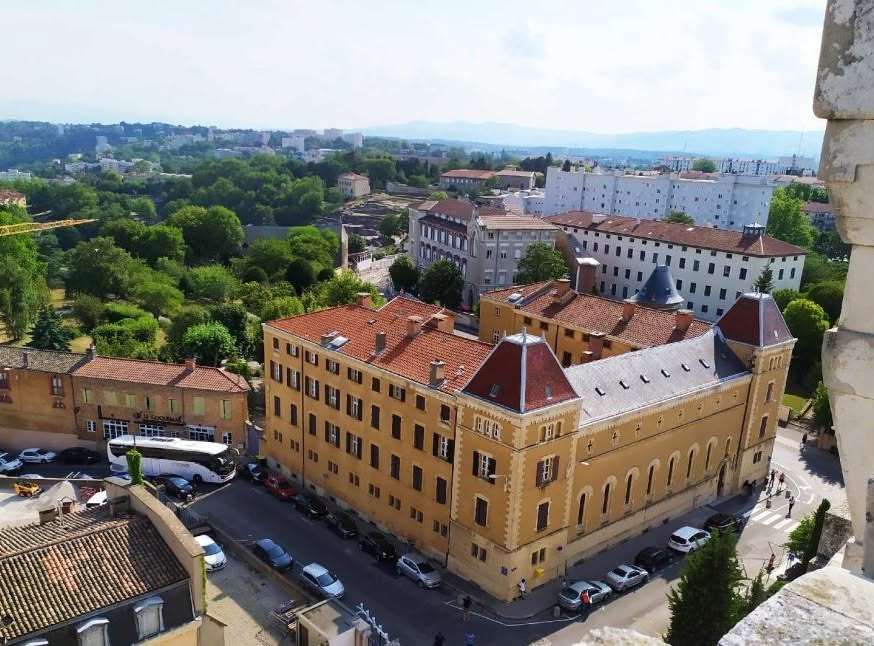
𝐂𝐞𝐧𝐚𝐜𝐥𝐞 𝐇𝐨𝐮𝐬𝐞 𝐢𝐧 𝐋𝐲𝐨𝐧 𝐅𝐨𝐮𝐫𝐯𝐢𝐞𝐫𝐞
𝐂𝐞𝐧𝐚𝐜𝐥𝐞 𝐇𝐨𝐮𝐬𝐞 𝐢𝐧 𝐋𝐲𝐨𝐧 𝐅𝐨𝐮𝐫𝐯𝐢𝐞𝐫𝐞 𝐇𝐚𝐯𝐞 𝐭𝐡𝐞𝐫𝐞 𝐛𝐞𝐞𝐧 𝐦𝐨𝐦𝐞𝐧𝐭𝐬 𝐢𝐧 𝐲𝐨𝐮𝐫 𝐥𝐢𝐟𝐞 𝐰𝐡𝐞𝐧 𝐲𝐨𝐮 𝐡𝐚𝐝 𝐭𝐨 𝐬𝐭𝐞𝐩 𝐟𝐨𝐫𝐰𝐚𝐫𝐝 𝐚𝐧𝐝 𝐦𝐚𝐤𝐞 𝐚 𝐝𝐢𝐟𝐟𝐢𝐜𝐮𝐥𝐭 𝐝𝐞𝐜𝐢𝐬𝐢𝐨𝐧 𝐟𝐨𝐫 𝐭𝐡𝐞 𝐠𝐫𝐞𝐚𝐭𝐞𝐫 𝐠𝐨𝐨𝐝? 𝐖𝐡𝐚𝐭 𝐡𝐞𝐥𝐩𝐞𝐝 𝐲𝐨𝐮 𝐟𝐢𝐧𝐝 𝐭𝐡𝐞 𝐜𝐨𝐮𝐫𝐚𝐠𝐞 𝐭𝐨 𝐭𝐫𝐮𝐬𝐭 𝐚𝐧𝐝 𝐚𝐜𝐭? In February 1842, the Congregation decided to establish a community in Lyon. The house was poorly situated, barely livable, and not at all suited for retreats. Yet Saint Thérèse took charge, remaining there with one other sister and trusting that, in God’s time, something better would come. A year later, providence opened a new door: land near the Church of Fourvière, an important pilgrimage site, became available for purchase. With little time to wait, Saint Thérèse prayerfully took the step of moving forward in acquiring the land. By 1844, the new house was completed: a fruit of trust, courage, and surrender to God’s providence.