
June 18, 2026

Homilies, Homily, Soul Food

Performative

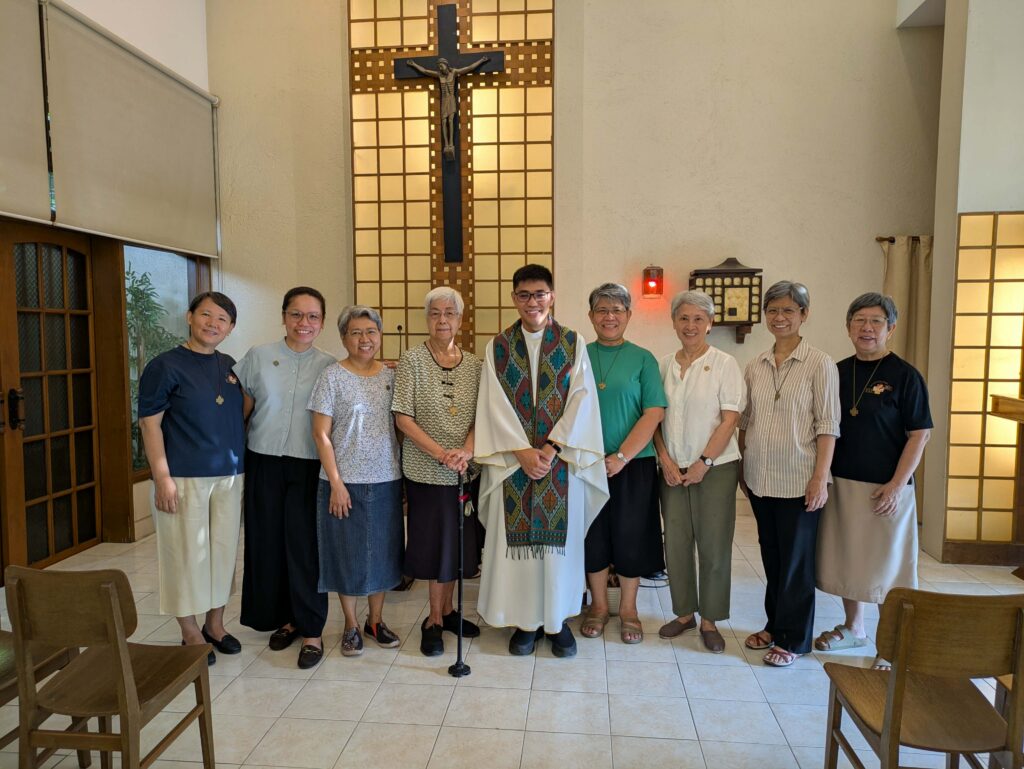
Performative Homily delivered by Fr. Dom Joseph Bulan, SJ 17 June 2026; Wednesday of the 11th Sunday of Ordinary Time Year C (2 Kgs 2:1, 6-4 | Ps 31: 20, 21, 24 | Mt 6:1-6, 16-18)Cenacle Retreat House Have you heard of the term ā€œperformativeā€? For the Baby Boomers and the Gen X here today, chances are this might be your first time to hear this word. But for the millennials, Gen Z, and Gen Alpha, you have probably heard this word, ā€œperformativeā€ used at least once, if not several times. Ano nga ba ang kahulugan ng salitang ā€œperformativeā€? Back then, something was considered ā€œperformativeā€ when it involves or relates to artistic or theatric performance. So usually, stage actors and actresses, as well as movie stars, would be involved in something performative. But in contemporary times, sa panahon ngayon, the word ā€œperformativeā€ has taken on a negative meaning. To be labeled as ā€œperformativeā€ means to say or do something to make oneself look good, righteous, or virtuous to an audience. Sa Filipino, may salita rin tayo para rito – ā€œpakitang-taoā€. (Mas masakit yatang pakinggan kapag nasa wikang atin). Ang pagpapakitang-tao at ang pagiging ā€œperformativeā€ ang nais tumbukin ni Hesus sa ating Ebanghelyo ngayon. In our Gospel today, Jesus warns his disciples about being hypocrites, of doing things merely for show. He says, ā€œWhen you give alms, do not blow a trumpet before you, as the hypocrites do.ā€ He likewise tells them, ā€œWhen you pray, do not stand on street corners so that others may see you.ā€ And regarding fasting, he warns them not to put on gloomy faces just to broadcast their sacrifice. In all these, Jesus is pointing to the same temptation: to turn acts that should be directed towards God into performances directed towards an audience. Instead of worshipping God, one begins to worship the approval and admiration of others. Dear sisters and brothers, within each of us is a temptation to be a ā€œperformerā€ or to be ā€œperformativeā€. We see this in school, whenever a student studies or volunteers for a project, not because it is the right thing to do, but because it will look good on a rĆ©sumĆ© or impress a teacher. We also see it in the workplace, when someone takes credit for a team’s accomplishment, meticulously crafting an image of competence and success while hiding mistakes and weaknesses. The temptation is not simply to do good, but to be seen doing good.  And yes, this temptation also happens to us priests and religious. Kahit kaming mga pari at mga relihiyoso, natutukso ring magsalita at kumilos upang magmkuhang mabait, katanggap-tanggap, at kapuri-puri sa iba – ika nga ng mga mas nakababata, maging mga cloutchasers. And if I daresay, this temptation is stronger for men and women of the Church. After all, our ministry is public. Here, it becomes very easy to confuse serving God with managing our image before others. Minsan, mas nagiging mahalaga pa ang papuri ng tao kaysa sa katapatan sa Diyos. Minsan, mas nagiging abala pa sa kung ano ang sasabihin ng iba kaysa sa kung ano ang hinihingi ng Panginoon. At minsan, maaari ring mangyari na ginagawa ang tama, ngunit para sa maling dahilan. There may be many reasons why we fall into the trap of being ā€œperformativeā€, but I believe one of them is a deep insecurity about one’s own sense of goodness and self-worth. ā€˜Yung tipong dahil sa palagay mo, hindi ka mabuting tao, o hindi ka kamahal-mahal, o hindi ka worth it, kaya sinisikap mong gawin ang lahat para magmukhang ganoon. But if there’s anything our Lord reminds us time and again, it is this – we do not have to ā€œperformā€ in front of him; we do not always have to prove that we are worth his love, his affection, his mercy. We do not say good things or do good things to chase clout from the heavens. Hindi tayo nagsasabi at gumagawa ng mabuti para makapuntos sa Diyos. No. As the recent solemnity of the Sacred Heart of Jesus has reminded us, our God is a God of love, and this love has been freely offered to all of us – independent of our worth, of our past, of what we have said and done. Instead, we intentionally choose to do what is right and just as a participation in the goodness and righteousness of God who first loved us.  So, the next time you are tempted to be ā€œperformativeā€, sa susunod na pagkakataong matutuksong ā€œmagpakitang-taoā€, ask yourself: ā€œIf no one were watching me right now, would I still choose to do this?ā€ And perhaps a second question: ā€œAm I doing this because I love God and neighbor, or because I love the praise and approval that may come from them?ā€  As we continue with our Eucharist, we beg for the grace of sincerity and integrity of heart. May the Lord free us from the need to constantly perform before himself and others. And may he teach us to do what is good, not for recognition or reward, but simply because we have first experienced the goodness of the God who sees in secret and loves us all the same. Amen.
General, Homilies, Homily, Soul Food

Freedom in Surrender

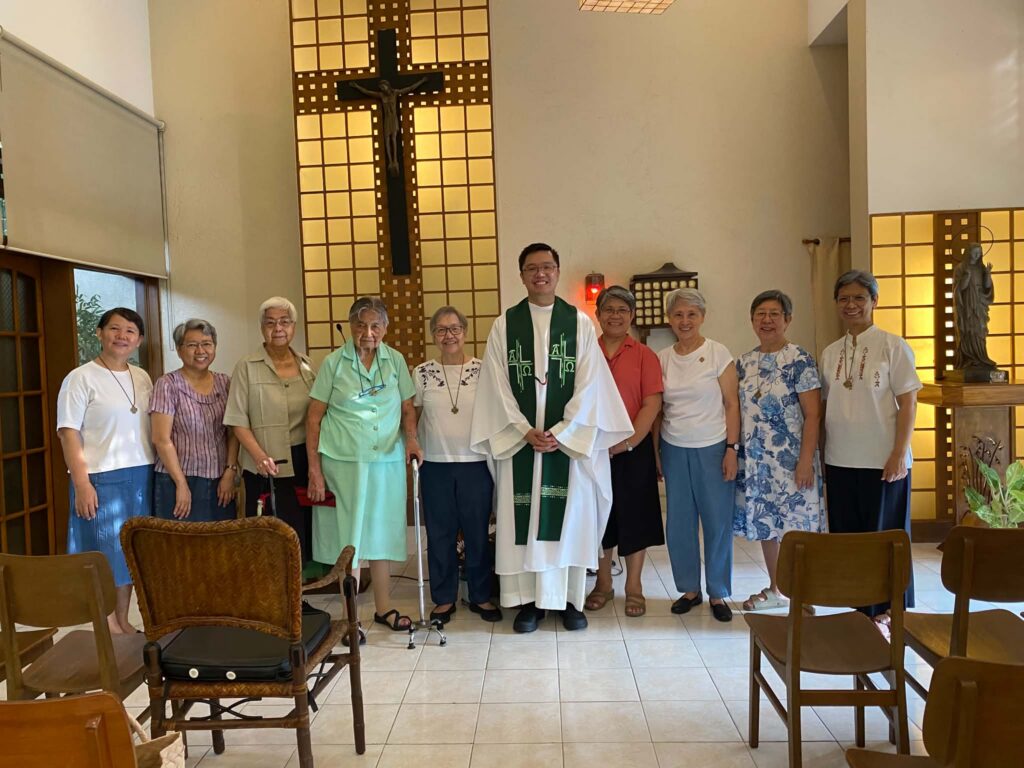
Freedom in Surrender Homily delivered by Fr. Bien Emmanuel C. Cruz, SJ 15 June 2026; Monday of the 11th Sunday of Ordinary Time (1 Kings 21:1-16 and Matthew 5:38-42)Cenacle Retreat House My dear brothers and sisters, the Word of God today presents two sharply contrasting visions of the human heart. In the first reading, we encounter King Ahab, who sees Naboth’s vineyard and desires it for himself. He is not in need, yet what belongs to another awakens a desire that quickly becomes entitlement. When Naboth refuses—faithful to his inheritance and to the law of God—Ahab does not accept limitation. His desire turns into resentment, and resentment opens the door to injustice. What begins as wanting ends in the violent taking of what was never his to claim. This is more than an ancient political story. It is a revelation of the human heart when it forgets God. It is what happens when desire is no longer shaped by gratitude, when power is no longer guided by responsibility, and when possession is no longer restrained by moral limits. It is the logic of grasping: if I want it, I should have it; if I can take it, it is mine. In the Gospel, Jesus presents a radically different horizon. ā€œTurn the other cheek.ā€ ā€œGive to the one who asks of you.ā€ These are not calls to passivity or weakness. They reveal a deeper strength—the freedom of one who is no longer ruled by the need to dominate, retaliate, or control outcomes. The disciple of Christ is not powerless, but free: free from revenge, free from the anxiety of possession, free from the need to settle every wrong by force or repayment. Both readings place before us a fundamental question: what kind of person are we becoming in the face of desire and injury? Do we become like Ahab—consumed by what we lack and willing to overstep moral boundaries to obtain it? Or do we become like the disciple Jesus envisions—rooted in trust, capable of generosity, and free enough to step outside the cycle of grasping and retaliation? The world teaches a different grammar. It tells us that life is secured through accumulation: more possessions, more achievements, more control over the future. It tells us that relationships are governed by exchange: I give so that I may receive, I help so that I may be helped, I forgive if it is deserved. It is a world of balance sheets and measured reciprocity. But the Gospel quietly disrupts this entire logic. Jesus reveals a life where love is not calculated, forgiveness is not conditional, and generosity is not measured. This is not irresponsibility. It is a deeper freedom grounded in trust in God. Here we meet one of the deepest paradoxes of the spiritual life: to be full, we must first be emptied. We often think fulfillment comes from holding more tightly, securing more guarantees, and controlling more of life. Yet the Gospel—and the experience of faith—reveals the opposite. God fills not what is full, but what is open. This emptiness is not nothingness. It is not despair or loss of identity. It is surrender. It is the interior act of releasing our grip on what we thought we needed so that God may give what we truly need. We surrender our plans, not because planning is wrong, but because our plans are often too small for what God is doing. We surrender our expectations, not because hope is futile, but because God’s generosity exceeds imagination. We surrender control, not because life is chaotic, but because providence is deeper than our calculations. As long as our hands are clenched around our own desires, there is little space for grace. But when we open them—even in uncertainty—we discover that what felt like loss becomes the very place of receiving. This is not only a theological idea; it is also a lived experience. Recently, I received my first pastoral assignment as a priest. I was assigned as Assistant Parish Priest in a small mission parish in the mountains of Bukidnon under the Jesuit missions. It came unexpectedly, without warning or preparation. None of the plans I had quietly formed seemed to apply anymore. At first, there was disorientation. What I thought would be my path suddenly shifted. It felt like something had been taken away. But in time, what seemed like interruption revealed itself as invitation. What felt like loss became the beginning of something deeper. I can now only see it with gratitude: God did not follow my plans; He led me beyond them. There, I began to understand more clearly that God is not competing with our control. He is not waiting for us to get everything right before He acts. Rather, He draws us into His wisdom, often by loosening our grip on our own. What feels like uncertainty can become the beginning of true freedom. It became an opportunity to surrender. And in that surrender, I learned something essential: God does not fill what is already full. He fills what is empty. He does not work on the logic of exchange or ā€œquid pro quo.ā€ His generosity is not transactional. It is overflowing, excessive, and beyond calculation. God is never outdone in generosity. Every gift we offer has already been preceded by His gift. Every act of love is a response to a love that came first. Every surrender is met not with deprivation, but with deeper life. God does not simply return what we give; He transforms it and multiplies it. Seen in this light, Ahab’s tragedy becomes clearer. He cannot accept limits because he does not trust abundance. He believes what he lacks must be taken, because he does not believe it will be given. His grasping becomes his prison. Jesus, on the other hand, reveals the path to true freedom: not the freedom to take what we want, but the freedom to release what we cannot control; not the freedom of possession, but the freedom of

Scroll to Top