
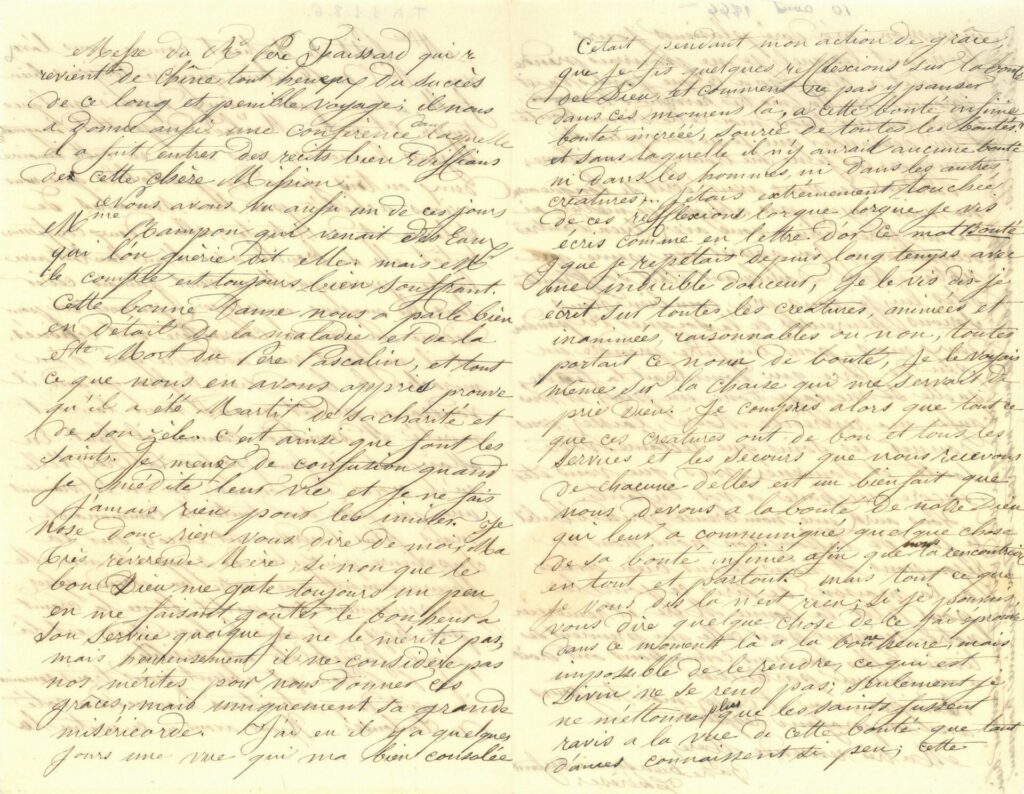
𝐄𝐱𝐩𝐞𝐫𝐢𝐞𝐧𝐜𝐞 𝐨𝐟 𝐒𝐩𝐢𝐫𝐢𝐭𝐮𝐚𝐥 𝐂𝐨𝐧𝐬𝐨𝐥𝐚𝐭𝐢𝐨𝐧𝐬 𝐚𝐭 𝐌𝐨𝐧𝐭𝐩𝐞𝐥𝐥𝐢𝐞𝐫
𝐄𝐱𝐩𝐞𝐫𝐢𝐞𝐧𝐜𝐞 𝐨𝐟 𝐒𝐩𝐢𝐫𝐢𝐭𝐮𝐚𝐥 𝐂𝐨𝐧𝐬𝐨𝐥𝐚𝐭𝐢𝐨𝐧𝐬 𝐚𝐭 𝐌𝐨𝐧𝐭𝐩𝐞𝐥𝐥𝐢𝐞𝐫 𝐖𝐡𝐞𝐫𝐞 𝐝𝐨 𝐲𝐨𝐮 𝐬𝐞𝐞 𝐠𝐨𝐨𝐝𝐧𝐞𝐬𝐬 𝐢𝐧 𝐲𝐨𝐮𝐫 𝐥𝐢𝐟𝐞 𝐫𝐢𝐠𝐡𝐭 𝐧𝐨𝐰? 𝐇𝐨𝐰 𝐚𝐫𝐞 𝐲𝐨𝐮 𝐢𝐧𝐯𝐢𝐭𝐞𝐝 𝐭𝐨 𝐬𝐮𝐫𝐫𝐞𝐧𝐝𝐞𝐫 𝐭𝐨 𝐆𝐨𝐝’𝐬 𝐠𝐨𝐨𝐝𝐧𝐞𝐬𝐬? Saint Thérèse experienced two spiritual consolations during her stay in Montpellier. One in 1864, during her morning prayer at the end of her retreat, she received the inspiration for her “Self-Surrender” (𝙎𝙚 𝙇𝙞𝙫𝙧𝙚𝙧). Two years later, in the midst of a challenging period, she experienced the “Vision of Goodness” (𝙇𝙖 𝘽𝙤𝙣𝙩é 𝙙𝙚 𝘿𝙞𝙚𝙪) where she saw the word “Goodness” written on all creatures – animate and inanimate, in “letters of gold.” These two experiences were later recognized as important sources of Cenacle Spirituality (General Chapter, 1998). These experiences did not come during good timed, but amid instability and suffering. To know more about the Spirituality of the Cenacle, click here: https://cenacle-gen.org/en/spirituality/#