Soul Food

Homilies, Homily, Soul Food

Homily | 6th Sunday in Ordinary Time

We live in a world filled with uncertainties, shifting values, and fleeting securities. Where do we turn for strength? Today’s readings remind us that to truly flourish, we must be firmly rooted in Christ, drawing from His life-giving grace. Allow me to share three points for prayer and reflection. First, Trusting in God: The Image of a Tree by the Water The prophet Jeremiah presents a vivid contrast: those who trust in human power are like dry, lifeless shrubs in the desert, while those who trust in the Lord are like trees planted beside flowing waters. A tree’s roots anchor it in the soil, drawing nourishment even in times of drought. The Psalmist echoes this image: the one who delights in the law of the Lord is like a tree bearing fruit in due season. The message is clear—when we place our trust in God rather than in passing worldly securities, we remain steadfast even in trials.   Second, the Beatitudes: “BE-attitudes” for Christian Living In our Gospel passage from Luke today, Jesus presents the Beatitudes and gives us guideposts on how to live as His disciples. These are not just promises of future blessings but invitations to embody a new way of life—a way of being. That’s why they are also called “BE attitudes”: ways of being and acting as followers of Christ. – To be poor in spirit is to depend completely on God’s providence rather than material wealth. – To be merciful is to imitate the heart of God. – To be pure in heart is to seek God above all things. – To be peacemakers is to build bridges rather than barriers. Each Beatitude invites us to be deeply rooted in God’s love, shaping how we think, speak, and act. Third and last, being Rooted in Christ: Trusting in His Love Finally, Paul in his letter to the Corinthians reminds us of the foundation of our faith: Christ’s resurrection. Just as the tree draws life from deep waters, so too must we draw life from the risen Christ, who conquered sin and death, that we may have life, and have it to the full. To be rooted in Christ means trusting in His provision, even when life is difficult. It means believing that in every challenge, in every moment of uncertainty, God’s love will sustain us. Like the tree planted by the river, we will never wither when we are nourished by Christ’s life-giving grace. The world tells us to chase security in wealth, power, and comfort. But Jesus calls us to a different way—the way of trust, humility, and love. Yes, we work hard and do our best; kakayod tayo ayon sa pangangailangan. But in doing so, our readings today remind us that everything should flow from God; we are being reminded that everything we do ought to be centered on and rooted in Jesus. The Beatitudes are our guide, our “BE-attitudes,” teaching us how to live as disciples. If we remain rooted in Christ, we will not fear the storms of life, for we draw our strength from Him who is faithful. Blessed indeed will we BE. May we continue to trust in God’s love, knowing that He provides for us…always. Amen.   Homily delivered by Fr. Mamert Mañus, SJ (Anticipated) Sixth Sunday in Ordinary Time Cenacle Retreat House 15 February 2025

General, Homilies, Homily, Soul Food

We Serve as the Lord Serves

We celebrate this Eucharist to mark the transition of Sr. Rose and Sr. Ria’s ministry. Interestingly, we have today’s readings from the Gospel of Mark as we do so. The very first word of the reading tells us a transition of Jesus’ ministry. It tells us that Jesus and his disciples were on a boat, and then opens today’s reading, where Jesus sees a vast crowd as he gets out of the boat. Let us take a closer look at the acts of Jesus and see how we serve God’s people as Jesus’ disciples. First, upon seeing the vast crowd, Jesus was moved with pity and compassion, for they were like sheep without a shepherd. The verb splangizomai in the original Greek is more than just a feeling. It means to be affected from deep within our gut, and we are moved to do something. It is a strong feeling—not just a romantic emotion. And so Jesus was moved to minister to them. Second, the disciples saw the people’s needs; it was already late, and they were hungry. And Jesus said: Feed them yourself. Seeing the needs of the people, Jesus advised his disciples to do something for them. That made the disciples complain that they were helpless with the great need before them. (This may be familiar to us: when we see the great need of God’s people, we feel we cannot do anything or the thing we can do will have little effect on them). And then Jesus asked, bringing us to the third act of the Lord: Third: How much do you have? What do you have? Jesus asks his disciples here not so much to completely fulfill what the people need as to what they can contribute. The disciples were rather self-focused, not knowing that others had something as well, and most significantly, they did not recognize that Jesus could do something more. With the little that they have offered to the Lord, Jesus asked them to group the people. This detail is something that we usually miss. When Jesus asked the disciples to group the people, it was not just about facilitating the distribution of food, but it also signaled to the people that it was time for them to be together, be concerned with one another, and see what they could do for each other. Modern exegetes would say that since the Jews would not go out of their houses without some provisions, this act signaled to them that it was time also to take out the little they could contribute. So, some people would say this miracle is a miracle of sharing. But some won’t accept this explanation. But whether they took out their provisions or not, this action led us to the next act of Jesus. Jesus took what the disciples offered to him, blessed them, broke them, and gave the pieces to the disciples to distribute to the people who were satisfied. This provides us with the imagery of the Eucharist. However, the critical lesson from this act is that no matter how little we have, as long as we offer it to the Lord, He can bless it and appropriate it to meet the needs of His people. As we mark this transition into another phase of Rose and Ria’s journey, into the transition of their ministry, we are reminded today of how we can also do our ministry and follow the acts of the Lord: 1) that we are sensitive to the needs of the people of God; that we allow their situation to affect us, their needs to move us; 2) and hear the words of the Lord, “Feed them yourself,” that is, serve them, minister to them according to what we can as he said, 3) what resources do you have? Even the little that we have can do something or can trigger some great things to happen. But first, we must acknowledge what we have and offer it to the Lord. It is essential that, given the immensity of the demands of the ministry, we must offer first to the Lord what we have and what we can. Then, 4) we allow the Lord to bless our offering and let him do the rest. The works in the Lord’s vineyard will always be greater than us. But as long as we offer the little that we have, God can do greater things for His people. Then we will see that it is His works, not ours; we are only his ministers. Let us pray for the grace to grow in docility to his voice and in the spirit of generosity so that God can continue his saving works in our midst, in our time. God bless us. Homily delivered by Fr. Edilberto “Bert” Cepe, CSsR Tuesday After Epiphany Cenacle Cebu 7 January 2025  

General, Homilies, Homily, Soul Food

The Solemnity of the Lord’s Epiphany

One cold winter morning, three palm fruit farmers were warming themselves by the fireside. Soon two of them were engaged in a heated debate comparing their religions to decide which one was the true religion. Okoro, the oldest among them, sat quietly listening to the debate. Suddenly the two turned to him and asked, “Decide for us, Okoro. Which religion is the right one?” Okoro rubbed his white beard and said thoughtfully, “Well, you know there are three ways to get to the oil mill from where we are. You can go right over the hill. That is shorter but it is a steep climb. You can go around the hill on the right side. That is not too far, but the road is rough and full of potholes. Or you can go around the hill on the left side. That is the longest way, but it is also the easiest.” He paused and then added, “But you know, when you get there, the mill man doesn’t ask you how you came. All he asks is, ‘Man, how good is your fruit?’” In the stories of Jesus’ birth, two special groups of people came to visit the new-born babe: the shepherds and the magi. The church has no special feast to commemorate the visit of the shepherds, but we have this special feast of Epiphany today to celebrate the visit of the magi. Why is that? It is because the visit of the magi is an eye-opener. The shepherds learnt of the birth of Jesus through a direct revelation from angels appearing in the midnight sky. This is direct and supernatural revelation. Many of us have no problem with that. The magi, on the other hand, learnt of the birth of Jesus by observing a star. The star did not say anything to them. They had to interpret this natural sign of the star to know what it meant and where it led. If we remember that the magi or the three wise men were nature worshippers, people who divined God’s will by reading the movements of the stars and other heavenly bodies, then we can see how the visit of the magi challenges some of our popular beliefs. Like the palm fruit farmers, religious people of all persuasions tend to think that their religious tradition is the only way to God. We hastily conclude that the way of God equals the way of our religious tradition. Yet the word of God cautions us against such a narrow interpretation. “For my thoughts are not your thoughts, nor are your ways my ways, says the Lord” (Isaiah 55:8). That is why we are fascinated with the story of the visit of the magi. It is a unique story that opens our eyes to the fact that God is not limited to any one religious tradition. God is open for everyone. Second, notice how people of different religious traditions came to know that the Son of God was born. The shepherds [who were regarded as unclean and could not take part in Temple worship without undergoing purification] came to know through a direct vision of the angels. The magi knew through a reading of the stars. And King Herod’s scribes came to know through searching the scriptures. Visions, stars, scriptures — different ways of arriving at the same truth. Of course, this does not mean that any religious tradition is just as good as the other. Notice how Matthew indicates that when the guiding star got to Jerusalem its light failed, and the magi had to consult the scriptures to direct them to Bethlehem. Over and above the natural light of the star the magi still needed the supernatural light of scripture to finally get to Jesus. Yet the crucial question in the story remains: Who actually got to find Jesus? Herod and his scribes who had the scriptures failed to find Jesus but the magi who followed the natural light of the stars were able to find him. Why? Because the Jewish authorities, even though they possessed the shining truth of revealed scriptures, did not follow it. They did not walk in the light of the scriptures. The magi, on the other hand, who enjoyed only a star light followed its guidance. This fact reminds us that it is not the possession of the truth that matters, it is how prepared we are to walk in the light of the truth that we possess. It is how we make use of the faith that was given us that matters most. It seems better to have the dim light of the stars and follow it than to have the bright light of the Holy Scriptures and neglect it. As Christians we believe that our religion possesses the fullness of truth. But what does that benefit us if we do not walk in the truth? Nature worshippers or non-believers who are sincerely committed to following the dim light of natural reason may also arrive at Jesus before Christians who have the exalted truths revealed by God but who do not walk the walk of faith. This is the challenging truth we celebrate today in the story of these pagan wise men who seek and find the Lord. What leads us to truth is not who we are but what our intentions are. The stars in our life lead us, we make choices on whether to follow them. Thus, it is worth asking ourselves: what are the stars in my life? How and to what is God calling me at this time in my life? Where does he want me to find him, to serve and follow him? This very day, let us stop in our tracks. Obviously, at this stage there are many things which, for better or worse, we cannot change, some decisions, right or wrong, which we cannot now undone. But it is not too late to look for our star and begin following it from where we are now.

General, Homilies, Soul Food

New Year’s Eve Homily

Introduction Isn’t it a bit strange that the Church celebrates the motherhood of Mary on the first day of the year? Have you ever asked that question to yourself? Why, after celebrating advent waiting for the Christ, and Christmas, welcoming the birth of the Lord, the liturgy now goes back to Mary? Isn’t reflecting about Jesus or the Holy Spirit or even God the father, a more appropriate celebration for today, the first day of the year? The New Year in the context of Christmas We may fail to appreciate the real importance and meaning of today’s feast if we don’t look back to what had happened for the past days. Today is the octave of Christmas. [Side notes: There are two very important feasts in the church calendar that are celebrated with octave: Easter and Christmas. These mysteries are of great importance that they are celebrated for eight consecutive days.] What did we celebrate in Christmas? We celebrated Christ’s birth. One Christmas day a couple of thousand years ago, the son of God was born by a woman named Mary who betrothed to a man named Joseph. Their son was named Jesus, was foretold by an angel, who will be Emmanuel, God is with us. And who among us here do not know the story? All of us; we know the details—virgin birth, birth in a manger in swaddling cloths, angels singing, shepherds and kings or magi visiting to pay homage. We as Christians have been telling this story, passing it on from generation to generation. Some things were added to further enhance the celebrations. Santa Clause, gifts and shopping, and food, and many more; sad to admit that sometimes, we focus more on the trimmings rather than on what really is the essence of the story. But what is really the essence of the story? One important fact—that God, in his desire to communicate to us and express his love, spoke through the birth of his son. He had to speak through a son because we can neither see with our eyes nor hear with our ears God. God has to become flesh—incarne—literally to become flesh, so that we may perceive what God wants to say. And the word became flesh so that we may understand. But that happened 2000 years ago. Mary gave birth to the human Jesus on the first Christmas. Last December 25 must be the 2024th Christmas, right? More or less. Today, several thousand years since, God still wishes to communicate to us. Do we need another Mary to give birth to another Jesus? Maybe not the same characters once more, but same story. Jesus still needs to be born. We still need to communicate Jesus to a deaf world, struggling to see and find God. We need to communicate God to everyone more than ever. And it is here where today’s feast becomes significant. I think, more than honoring Mary herself on the first day of the year, we are honoring her motherhood, her theotokos— the mother of God. We honor the birthing, we need to give birth to Jesus. Like Mary, we have to bear and give birth to Jesus wherever we are. Her motherhood is equally a grace and challenge for each one of us. This is the grace we received when we were baptized. In and through our own humanity, we en-flesh—in-carne—the Lord. In a sense, becoming mothers of our Lord and giving birth to him in our midst is a grace we received. This is our grace—we can do it. In our joys and sorrows, we bring that grace to reality. But it is also equally a challenge—it’s not easy to give birth to Jesus, to be a bearer of the Lord. How many times can others really see Jesus in us? How many times are people blessed because of us? We know that it is a challenge and often time we retreat run away when called. And it is particularly significant that if you look back at our celebrations for the past days, the past liturgies tells us the difficulty. On the 25 was Christmas day. The next day, the 26th was the feast of St. Stephen, the first Christian martyr stoned to death. On the 27th was the feast of St. John the evangelist–the writer of the fourth gospel, on the 28th was the celebration of the holy innocents, on the 29th St Thomas Becket–the bishop of Canterbury who was martyred when he stood up against the king and royalty. The eight days of celebration after Christmas was marked my martyrdom. Challenges. One night, I was talking to a Jesuit friend. We entered the seminary together. He said, “No good deeds are left unpunished.” This is the harsh reality of life. This is what motherhood of Mary means; it is by no way reserved only to Mary, we are graced and challenged to be mothers of Jesus too. Mary was the mother of the human Jesus 2000 years ago; you and I are graced and challenged to give birth to the resurrected Christ today, in our midst–in truly loving one another, in forgiveness, in our generosity, in little deeds of charity. Let me end with the lyrics of a song written anonymously entitled The Work of Christmas. Let this remind us of theotokos, the motherhood of God. The Work of Christmas When the song of angels is stilled, when the star in the sky is gone when the kings and princes are home when the shepherds are back with their flock the work of Christmas begins. To find the lost, to heal the broken to feed the hungry free the prisoners to rebuild nations to bring peace among brothers (and sisters) to make music in the heart. May all of us accept the grace and challenge to give birth to the Emmanuel, the resurrected Christ today, in our midst. Amen. Homily delivered by Fr. James Gascon, SJ on New Year’s Eve Mass, The Solemnity of the

General, Homilies, Soul Food

What’s in a Name?

MEMORIAL OF THE MOST HOLY NAME OF JESUS: WHAT’S IN A NAME? Remember the names that parents gave their newborn babies during the pandemic? In the US, the most famous ones would be Covid for boys and Corona for girls. In India, one infant was reportedly named Sanitiser, another Virus or veerus for some babies in the Philippines. The intention of course was very clear: it was to remember the difficult but nonetheless blest time that the baby was born. But how we wished that these parents were more creative like couples in the US who named their baby Demi which is short for PanDemic, or Rhona short for Corona. And yet nothing would beat babies then named Moderna or Johnson or sinovax or novovax. Surely, the Jews of Jesus’ time and even perhaps now, would have been scandalized by these names. You see, Jews had such respect for names. Names or naming people was such a serious business or a sacred undertaking for them. We say now that the eyes are the windows to the soul of a person. For the Jews, it is their names. Their names are the doors to one’s identity and personality. They contain the very purpose or mission of your life, the very reason for your existence, your place or foothold in the world. During Advent and Christmas, we saw this, not in Matthew’s Genealogy where we were introduced to Jesus’ ancestors with tongue-twister names, but in the advent figures we met who possessed beautiful names – Mary or Miriam which means beloved or rebel, Joseph which means God adds or increases, John which means Gift of God, Elizabeth which is God is abundance, and Zechariah (my favorite) which means God remembers. The Son of God on the other hand, had two names. Immanuel, according to the Prophets of the Old Testament. But Mary and Joseph gave him the name Jesus. Immanuel means God is with us; Jesus, English for Yeshua, on the other hand, means God saves or The Lord is Salvation. There is a debate among bible scholars over why Joseph and Mary chose Jesus and not Immanuel during the brit milah or Jesus’ circumcision (As accounted for in our Gospel today). But more interesting for me, and the point I really want to make is that the Prophets suggested other titles or names for the son of man: Wonderful Counselor, Mighty God, Everlasting Father, Prince of Peace, The Lord Our Righteousness, The Son of the Most High, the Son of God, and of course the Messiah, the Savior, the Christ or the Anointed One—which are superlative, majestic titles befitting the dignity of the Supreme Being that is God. But Mary and Joseph did not choose any of these hi falluting, grandiose, or over-the-top names that clearly separated God from all of his creation. They chose Jesus which among Jews is really a common or commoner’s name, like our Juan or Nene. Because that was to be the mission of Jesus: To embrace our common lot. To become one of us or one with us. Which is of course what Immanuel means. But why this mission, why the incarnation, why precisely, Jesus or Immanuel? I think because many of us despise our humanity, our limitations, our vulnerabilities, our weaknesses. Including this imperfect world that we have created. From the very beginning we wanted to escape from our skin and become like God, as Adam and Eve were tempted to do and as the story of the tower of Babel reveals. Now, we are racing to go to Mars or somewhere else, leave earth behind and all its corruption. How ironic, how sad, how unfortunate, because at Christmastime, we are reminded that all that God ever wanted was the opposite of all that. All he wanted was to become one of us and be with us, Jesus, Immanuel. All he wanted was to embrace humanity, warts and all, as we say. And by doing that, he blessed it with his sacred presence. As Cardinal Chito Tagle says, God descends to us, so we can ascend to him. So, friends, as we celebrate this feast, we pray that just as God humbled himself to become the commoner Jesus, may we also become Immanuel, God’s presence, God’s touch, to the people in our lives, and to the world around us. Homily delivered by Fr. Emmanuel (Nono) Alfonso, SJ  3 January 2025 Cenacle Retreat House

General, Homilies, Homily, Soul Food

Smitten

To grasp the very gift and meaning of Christmas, I often turn to this story that is really a parable by Soren Kierkegaard. Once upon a time there lived in a great castle a king so powerful and wealthy he was adored and feared by all in his kingdom. Alas, in this kingdom, there lived a beautiful woman, a lowly maiden, with whom he was smitten. Knowing the wide gap between them, the king thought hard about what he would do to win the heart of this woman. At first, he thought of going to her as he was, as king. However, he knew that if he went to her in all his kingly power and glory, with “all the king’s horses and all the king’s men,” she would instantly be his for the taking. She would be dazzled by his wealth and power, or she would be intimidated by the horses and men. She would say “yes” out of enchantment or she would not dare say “no” out of fear. The king knew this and pondered deeply how love would ever work if love were not free or if love were driven by fear. Love that was merely enchanted was not love, and love that was afraid was also not love. And so he thought of another way. He would disguise himself as a beggar. Coming to her as a poor man, with all his kingliness hidden from her, he might be more sure of her love (if she ever came to love him back). If he pretended to be poor like her, he would know better if her love was true. Then again, he thought, if he did just that, he wouldn’t be true to her and to himself. What kind of love would thrive in deception, what love would that be if it were based on a lie? As the king agonized over what he would do, he eventually came upon the one and only way he was ever going to win her heart. And that was for him to remove every manner of pretense and divest himself of all his kingly wealth and power. The only way was to leave the comfort of his castle so he could live and share the life of his beloved. To love her and to live with her happily ever after, he decided to disarm and let go of power. Dear friends, the Christmas story is a love story. But it is more than just a fairytale ala Cinderella or some familiar telenovela. Tonight when we draw close to the Child in a manger, we glimpse our king and our God. We come to realize the radical and irreversible choice God has made to love us. May it awaken our faith to see Emmanuel, God with us, becoming vulnerable as we are, taking on our flesh, our joys and tears, our dreams and pain, even our dying. May it calm our fears to hold this Child’s hand in our hand while we walk the darkness of our world. May it warm our love to feel the heart of God beating in ours. And may it quicken our hope to catch the breath of this infant in a manger, breathing new life into us once more. Out of love, a king chooses to disarm and let go of power. As God has so loved us, so are we to love one another. Homily delivered by Fr. Jose Ramon (Jett) T. Villarin SJ during the Christmas Eve Mass at The Cenacle 24 December 2024

General, Homilies, Homily, Soul Food

Mighty

I remember applying to the Society of Jesus about 27 years ago and in one of the interviews, I was asked, so why are you applying? And clumsily, I sputtered out some platitudes but one statement annoyed the Jesuit priest interviewing me. I said something like, I am a sinful person, wounded, fallen, and only God is calling me to the Society to take care of me, to heal me. “What? You think the Society is a hospital, a psychiatric ward?” And I froze. But I’m sure that interviewer would be freezing now what with Pope Francis calling the Church a field hospital. Or maybe, he would have read by now Henry Nouwen writing about all of us being wounded healers. But I remember that interview because in the readings today, we are confronted by this giant of a man that is Elijah, the greatest prophet of Israel. Even John the Baptist in the new testament was just a reiteration of the fearless man of God. As characterized by the Bible, Elijah and John seem to be the standards of the faith against whom we ought to measure up. Certainly they were courageous in proclaiming the word of God; they spoke to power as we say now, Elijah against King Ahab, his powerful queen Jezebel, and the prophets of Baal; John the Baptist against Herod and the Roman empire. Listen to the words with which the Prophet Sirach from the first reading described Elijah: he was like a fire, his words were a flaming furnace, he was awesome in his wondrous deeds and his glory has no equal. Wow! Such high standard indeed. And it is Elijah and his “reincarnation” as it were, John the Baptist, who meet us during the early days of Advent and challenge us to prepare for the coming of the Lord. They can appear to be like fierce lions guarding the opening of the cave where Jesus would be born, snarling at you: “Are you really worthy to see the Lord?” Indeed, these advent figures can be daunting to us. Until we remember that Elijah fled from Queen Jezebel for fear of his life for days on end. And out of exhaustion and fear, he went into depression and even asked God to take his life already. Oh, so, the almighty prophet had feet of clay as well! He had moments of weakness and vulnerability like us. John the Baptist was human too. Languishing in jail, at Herod’s order, John heard of Jesus and began nursing doubts and apprehensions whether Jesus was the messiah or whether he was doing it correctly because rather than hurling fire and brimstones at the Jews, Jesus was wining and dining with them. These accounts of course do not subtract anything from the greatness of these prophets of God. But these make them very human like us. They too needed to be saved. They too did not just proclaim the Word but also needed to hear it and receive it as well. So when we encounter them again one of these days of Advent, before we get scared off by them and their over the top personalities, I hope we remember that they are guides, or co-pilgrims or co-seekers on our way to the crib. They too are wounded and broken and in need of the salvation that comes at Christmas. AMEN. Homily delivered by Fr. Emmanuel “Nono” Alfonso, SJ 14 December 2024 Saturday, Second Week of Advent Cenacle Retreat House

Features, General, Homilies, Soul Food

33rd Sunday in Ordinary Time | 2024

There’s this story about a young lector, a beginner, who was reading in church to a big crowd for the first time. He was super nervous and had a difficult time getting through the first reading. When he finished, he accidentally shouted,  “This is the end of the world!” (Of course he meant, “end of the word.” Then the whole congregation replied, “Thanks be to God!” Someone once jokingly said that it is often those who are not certain, not clear about this life we live in now, who worry about the next. At first glance, today’s readings might seem focused on the afterlife, but the readings actually emphasize living fully in the present moment. You may have heard the story of St. John Berchmans, a young Jesuit scholastic who passed away at the age of 22. When asked what he would do if he knew God would call him while he was playing football, he reportedly said, “I would keep playing.” I believe this reflects the idea captured by the Latin phrase ” Age quod agis,” meaning “Do what you are doing.” It encourages all of us, as followers of Christ, to be fully present and dedicated in whatever we are doing, even at the end of our lives. As we approach the Feast of Christ the Eternal King, the Church encourages us to reflect on our readiness to welcome Him, not in the distant future, but here and now, as He is constantly present. The key message of today’s readings is to “watch.” Jesus reminds us that no one knows the exact time of His coming, chacitine the temporary nature of our world. Many people often forget that our time here is limited; and so they live as if, they will be here forever, perhaps accumulating possessions or harboring grudges. Yet, deep down, we all know that we are not permanent; our existence is fleeting and transitory. Given the limited time we have, it is important to focus on living fully in the present, and aligning our actions, with God’s desires. Each of us has a unique role that only we can fulfill, and if we do not take action now, that part of our purpose will remain incomplete. The best time to embrace our calling is in this very moment. This present moment is the foundation for asking meaningful questions during spiritual direction and retreat: What moves you or stirs your heart? What brings you life? What do you truly want to dedicate yourself to? What do you desire most deeply? And what sustains you in times of suffering? To help us focus on the present moment is why we ask those questions. The coming of the Son of Man is a call to unity, not division. By embracing God’s purpose and living fully in the present, we can rise above the fear of missing out, a struggle many young people face today. Our actions should flow from a genuine love for goodness, not from fear or the hope of personal gain. When we adopt this perspective, we discover true contentment and peace, freeing ourselves from the grip of fear and opening our hearts to a life of purpose and fulfillment. The second reading highlights this selfless action and fearlessness, exemplified by Jesus on the Cross. He sacrificed himself for humanity, not for personal gain but to save us from self-absorption, from selfishness and show us the way to new life. Jesus’ life and death are models of unconditional love, inspiring us, moving us to follow His example.  Today, we are invited to shift our focus from a distant future to the profound reality of Christ’s presence with us in this very moment. Let us open our hearts fully to this sacred time, anchoring ourselves in His love, and letting our lives become a reflection of His grace and compassion here and now. Amen.   Homily delivered by Fr. Chris Dumadag, SJ 33rd Sunday in Ordinary Time 16 November 2024 | Anticipated Sunday Mass Cenacle Retreat House

General, Homilies, Soul Food

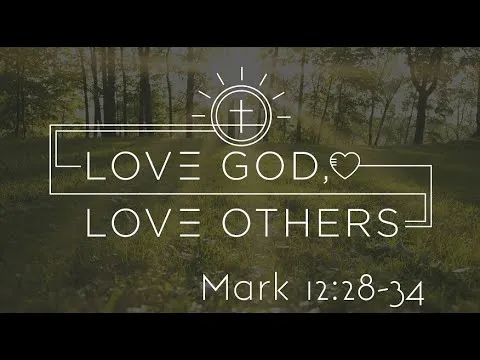
Meritocracy | Mark 12: 28-34

            What did scribes do? They were ancient Israel’s human word processors & Xerox machines. With almost maniacal accuracy, they hand-copied biblical texts word for word on parchment. But before getting to work, they washed their whole body clean. Then, with ink from a special recipe, they wrote each letter carefully, not missing a single dot or dash that Hebrew letters came with, making sure no two letters touched each other. Otherwise, ulit. They said each word out loud as they wrote it. Except the word “Yahweh,” w/c was too sacred to verbalize. Instead, they said “Adonai.” But when they came to that name, they stopped, washed their hands 7 times, wiped the pen clean, dipped it anew into the ink, & only then wrote “Yahweh.” How many times did the word Yahweh occur in the Torah? Well, that was how many times they washed hands & pen. So, you can imagine how scribes obsessed over the minutiae of the Law!             But this one? He was different. Unlike other scribes, Pharisees, teachers of the Law, this one got it. Loving God & neighbor, he said, was “worth more than all burnt offerings & sacrifices.” Jesus had never heard a hierarch soft-pedal Temple sacrifice like that. You see, sisters & brothers, for Jews, sinning was incurring a debt w/ God. Utang. After a long process of purification, sacrificing a dead animal at Temple was the climax of atonement. Whereupon the debt of sin was paid in full. But then & only then did God clear the slate.             Why do we think that this is absurd today, sisters & brothers? Because it smacks of what we call meritocracy. When we think that what we do or not do for God conditions God to do & not do for us, then, we just might’ve fallen into meritocracy. Meritocracy comes in many subtle religious behaviors today. “I will help the poor so that God will not make me poor. I will help raise funds for the church so that God will accept me into heaven. I will pray the rosary so that Jesus will see I’m devoted to his Mother, & grant my petition & save me.” Seems nothing wrong there, is there?  But scrutinize it a little more & we notice that we’re in fact saying, “It’s what I do first that will condition God to then do for me what I want him to do.” In meritocracy, God simply reacts to the stimulus of my merits or demerits. But by default, God idles in neutral. My merits rev up his goodness, & my demerits make him hit the brakes on loving me. But sisters & brothers, nothing conditions God. No one conditions God. Not even the holiest of saints condition God. God’s love & his forgiveness are not conditioned by our initiatives at doing good or saying we’re sorry. Baliktad. Because God is loving & forgiving, we, his creatures, are able to love & repent at all. Because we have been loved & forgiven, so do we also love & say we’re sorry.             The analogy of good parents often helps. Imagine how good parents would feel if their child said, “Mom, dad, I will love you so that you will love me. I will be a good child so that you will be good to me.” Absurd. “Anak, nauna na kitang minahal. Patuloy kitang aarugain hanggang matuto ka ring magmahal. Patuloy kitang patatawarin hanggang matuto kang humingi ng tawad at magpatawad. Kung ayaw mong magmahal o humingi ng tawad, ikaw lang ang sisira sa sarili mo. But as far as I’m concerned, hindi kita matitiis. Patuloy kitang mamahalin at patatawarin, kasi anak kita.” That is precisely what a good parent would say. A good parent’s love & pardon are not conditioned by the merits & demerits of their children. Rather, they would like their kids to learn how to love because dad & mom love them, & not so that dad & mom would love them. Good parents would like their kids to say they’re sorry not because mom & dad won’t forgive them if they don’t, but because dad & mom have always forgiven them their faults. True love is not meritocratic. (And yes, sisters & brothers, I am aware that there are parents who are meritocratic. Their love & attention are conditioned by the merits & demerits of their kids. I’ve taught in 3 Ateneo high schools. Children w/ parents like this are often highly accomplished, yes. But they are some of the saddest, most troubled students I’ve ever known. Why? Because in true loving, there should never be meritocracy.)             Multiply that by a gazillion times w/God whose love goes beyond meritocracy. If God’s love were conditioned by our capacity to pay for the debt of our sins, would we have survived this well for this long? Yet, haven’t we noticed, sisters & brothers? God does not give us what we really deserve. God gives us more than we deserve. “So, Fr Arnel, going back to sacrifice, good deeds, & atonement, do we not do them anymore since God loves & forgives us anyway?” No, we continue offering sacrifices, loving, & atoning. But never think of them as bribes to God! Because that’s what meritocracy comes down to: bribing God w/ the currency of our merits. But if good parents do not keep a ledger of their children’s merits & demerits according to which they give or deprive them of love & forgiveness, why would our God be any less? No, we continue to sacrifice, to love God & others, to say we’re sorry, because God has loved & forgiven us first & always, & much, much more than we even deserve to be loved & forgiven.             Sadly, meritocracy is written almost indelibly on the parchment of our Catholic mentality. The Word was made Flesh & dwelt among Jews

General, Homilies, Soul Food

World Mission Sunday 2024

The readings for the 29th Sunday in Ordinary Time bring us face to face with a powerful message about humility, service, and what true greatness is. In the Gospel of Mark that we just proclaimed, James and John ask Jesus for positions of glory in His kingdom. Their request reveals a misunderstanding of what it means to follow Christ. Jesus responds by teaching them—and us—that true greatness is found not in power or prestige but in humble service. “Whoever wishes to be great among you must be your servant, and whoever wishes to be first among you must be the slave of all. ” Jesus Himself provides the ultimate example: “For the Son of Man did not come to be served but to serve and to give his life as a ransom for many.” In the world we live in, greatness is often associated with status, power, and authority. Yet, Jesus flips this understanding on its head. He shows us that greatness in the kingdom of God is not about how much control we can exercise or how high we can climb, but about how low we can stoop and bend in order to serve others. It is a radical call to humility, love, and self-sacrifice.  Jesus doesn’t just teach this; He himself lived it. His whole life was one of service, ultimately culminating in His death on the cross. He did not seek to dominate but to heal, to teach, to give His life so that others might have life. For us, His followers, this means that if we want to be great in the eyes of God, we must imitate Christ’s humility. We must be willing to serve without seeking reward, to love without expecting anything in return, and to give ourselves in a way that lifts others up. Humble, loving service, then, is the path to true greatness in God’s Kingdom.  This Sunday, we also celebrate World Mission Sunday, a reminder of the Church’s universal mission to proclaim the Gospel to all nations. The theme of service and humility ties beautifully into this celebration. The mission of the Church is not about imposing our will on others or seeking to expand power. Instead, it is about serving the world in love, sharing the Good News of salvation, and living out the example of Christ who gave His life for others.  The call to mission is a call to follow Jesus in service and humility. Each of us, as baptized Christians, is sent to be a witness to Christ in the world. We are called to embody His love and humility, to go to the peripheries of society where people are suffering, neglected, or forgotten. On this World Mission Sunday, we are reminded that this mission is not just for priests, religious, or missionaries in distant lands—it is for all of us, right where we are. Whether in our families, workplaces, or communities, we are called to be servants, bringing Christ’s love to others. By following Jesus’ example and living it out, we thus partake in the Mission of the Church.  But we ask ourselves, “what does this humble service look like in our daily lives?” Well, it may be as simple as listening to a friend who is going through a tough time, helping a colleague who is struggling, or reaching out to someone in need. It may also involve standing up for those who are marginalized, advocating for justice, and working to alleviate the suffering of others. Every act of kindness, every gesture of love, every moment we give ourselves to others in Christ’s name becomes a participation in the Church’s mission to the world.  As we continue to ponder and reflect on these readings and celebrate World Mission Sunday, we are reminded that following Jesus means embracing a life of service and humility. It is through this service that we participate in the mission of the Church and reflect the love of Christ to the world. Let us ask for the grace to serve with humble hearts, to love as Christ loved, and to go out into the world, carrying the Good News not just in our words but in the way we live our lives.  In the end, the greatness that Jesus speaks of is not measured by how much we accomplish in the eyes of the world, but by how much we have loved and served in the spirit of Christ. May we, as His disciples, strive to serve with humility and love, joining in the Church’s mission to bring the Gospel to all people, especially the least, the last, and the lost.   Homily delivered by Fr. Mamert Mañus, SJ 29th Sunday in Ordinary Time (Anticipated Mass) 19 October 2024 Cenacle Retreat House  

Scroll to Top