Begin Your 2026 with the Lord
ᑕOᗰE TO TᕼE ᑕEᑎᗩᑕᒪE ᗩᑎᗪ ᗷEGIᑎ YOᑌᖇ 2026 ᗯITᕼ TᕼE ᒪOᖇᗪ.
This weekend retreat offers a reflective and creative space where you will contemplate Christmas images in art, pray on scripture texts, reflect on your life’s journey, and create your own art journal. Through these activities, you will pray and encounter the God who “pitched his tent among us” and became one of us.
29-30 November 2025 Facilitator: Sr. Judette Gallares,rc This stay-in weekend retreat will help the participants begin the new liturgical season by preparing their hearts and minds to the celebration of the nativity of Jesus Christ. register here: https://forms.gle/8bZbQKX8fhuSvvoK7
The Hapag Community of the Joey Velasco Foundation — composed of mothers and youth — held their Jubilee of Hope-themed Day of Recollection at the Cenacle Retreat House in Quezon City, facilitated by Sr. Ria Valeroso, rc last 14 June 2025. We are deeply grateful to the generous benefactors of the Saint Thérèse Couderc Foundation who made this recollection possible. Thank you for your continued support! If you wish to partner with us in sustaining this mission, you may refer to the bank details below or contact us for more information. cenacle.philippines@gmail.com +639175703349 +63270059220 “𝘞𝘦 𝘢𝘪𝘮 𝘵𝘰 𝘥𝘦𝘷𝘦𝘭𝘰𝘱 𝘵𝘩𝘳𝘰𝘶𝘨𝘩 𝘴𝘤𝘳𝘪𝘱𝘵𝘶𝘳𝘦𝘴 𝘵𝘩𝘦 𝘴𝘰𝘤𝘪𝘰-𝘴𝘱𝘪𝘳𝘪𝘵𝘶𝘢𝘭 𝘮𝘪𝘯𝘥𝘧𝘶𝘭𝘯𝘦𝘴𝘴 𝘢𝘯𝘥 𝘷𝘢𝘭𝘶𝘦𝘴 𝘰𝘧 𝘰𝘶𝘳 𝘮𝘦𝘮𝘣𝘦𝘳𝘴, 𝘵𝘰 𝘱𝘳𝘰𝘷𝘪𝘥𝘦 𝘴𝘱𝘪𝘳𝘪𝘵𝘶𝘢𝘭 𝘥𝘪𝘳𝘦𝘤𝘵𝘪𝘰𝘯 𝘢𝘯𝘥 𝘤𝘰𝘶𝘯𝘴𝘦𝘭𝘪𝘯𝘨, 𝘢𝘯𝘥 𝘵𝘰 𝘴𝘱𝘰𝘯𝘴𝘰𝘳, 𝘴𝘶𝘱𝘱𝘰𝘳𝘵 𝘢𝘯𝘥 𝘶𝘯𝘥𝘦𝘳𝘵𝘢𝘬𝘦 𝘴𝘱𝘪𝘳𝘪𝘵𝘶𝘢𝘭 𝘢𝘯𝘥 𝘦𝘥𝘶𝘤𝘢𝘵𝘪𝘰𝘯𝘢𝘭 𝘱𝘳𝘰𝘫𝘦𝘤𝘵𝘴 𝘧𝘰𝘳 𝘶𝘯𝘥𝘦𝘳𝘱𝘳𝘪𝘷𝘪𝘭𝘦𝘨𝘦𝘥 𝘱𝘦𝘳𝘴𝘰𝘯𝘴 𝘰𝘳 𝘨𝘳𝘰𝘶𝘱𝘴.” (𝘍𝘳𝘰𝘮 𝘚𝘛𝘊𝘍’𝘴 𝘚𝘌𝘊 𝘈𝘳𝘵𝘪𝘤𝘭𝘦𝘴 𝘰𝘧 𝘐𝘯𝘤𝘰𝘳𝘱𝘰𝘳𝘢𝘵𝘪𝘰𝘯, 𝘦𝘥𝘪𝘵𝘦𝘥)
Do you miss Pope Francis? What do you remember most about his teachings or words of wisdom? I recently read his autobiography titled Hope: An Autobiography, and there found an interesting lesson from Pope Francis. Dios nos primerea. God is always ahead of us. It is actually part of the deep Argentinian or Latino Catholic Christian faith. It is based on a vision from Ezekiel. As the winter season begins, the prophet sees the almond tree and observes that among the trees in the forest, it is the first to bloom and bear fruit. It symbolizes God, writes Pope Francis, who is always ahead of us, always first, always leading us. Even when we sin, God is already waiting for us; like the Prodigal father, he is ahead in waiting for our return. Dios nos primerea. I remember this principle because today the beautiful and very touching story of Joseph the dreamer ends. We have been following this very human story for a week now. The drama ends today. With the death of Jacob, the patriarch, the brothers who envied Joseph and maltreated him, panicked. They thought finally Joseph would exact vengeance upon them. But Joseph had really forgiven them and told them that everything that happened was God’s will. God, he said, meant it for good, to achieve his present end which is the survival of many people. Indeed, as economic minister of the whole of Egypt, Joseph saved the kingdom from famine. Dios nos primerea. God was ahead of Israel; and even the crime that the brothers committed against Joseph was mysteriously part of God’s plan for the chosen people. The Gospel puts it in another way: divine providence. Jesus teaches that there is nothing to fear because God provides for everything that we need. “Even all the hairs of your head are counted,” he says. “So do not be afraid; you are worth more than many sparrows.” Like a mother or a father, God already knows what we need and provides for them. Dios nos primerea. He is always ahead of us. The legendary Ateneo High school teacher, Mr Onofreo Pagsanghan or Pagsi for short, shared that when he and his wife was newly married, they would spend days planning for the future of their family. Once, they brought up where to build a home. At that time, this was still wilderness but it was the closest to the Ateneo. They thought it would be very convenient for them, since Pagsi was teaching at the school . all he had to do was cross the street and Ateneo would be there. And if they had children, the boys would also conveniently just cross the road as well and attend school; and for the girls, they would just cross the street then walk left to go to Maryknoll. Good thinking, they said, and settled down at Esteban Abada. He was so impressed by how the plan worked out well. And then it dawned on him how we humans are so good at planning our future: we buy life insurance plan, health insurance, educational plan, etcetera. Despite our limitations—we cannot see the future—we rely so much on our capacity to prepare for the future. And yet, he says, we deny the same faith from God. When crisis happens in our lives—wars, natural calamities, grave illness or death—our faith in God waivers. Surely, he says, God who is omnipotent, omniscient and all loving has prepared a future better than we can ever imagine. As the prophet Jeremiah says, “For I know the plans I have for you, plans to prosper you and not to harm you, plans to give you hope and a future.” Or indeed as the Latinos would simply say, “Dios nos primerea.” God is always ahead of us! Homily delivered by Fr. Emmanuel (Nono) Alfonso, SJSaturday, 12 July 202514th Week in Ordinary TimeCenacle Retreat House
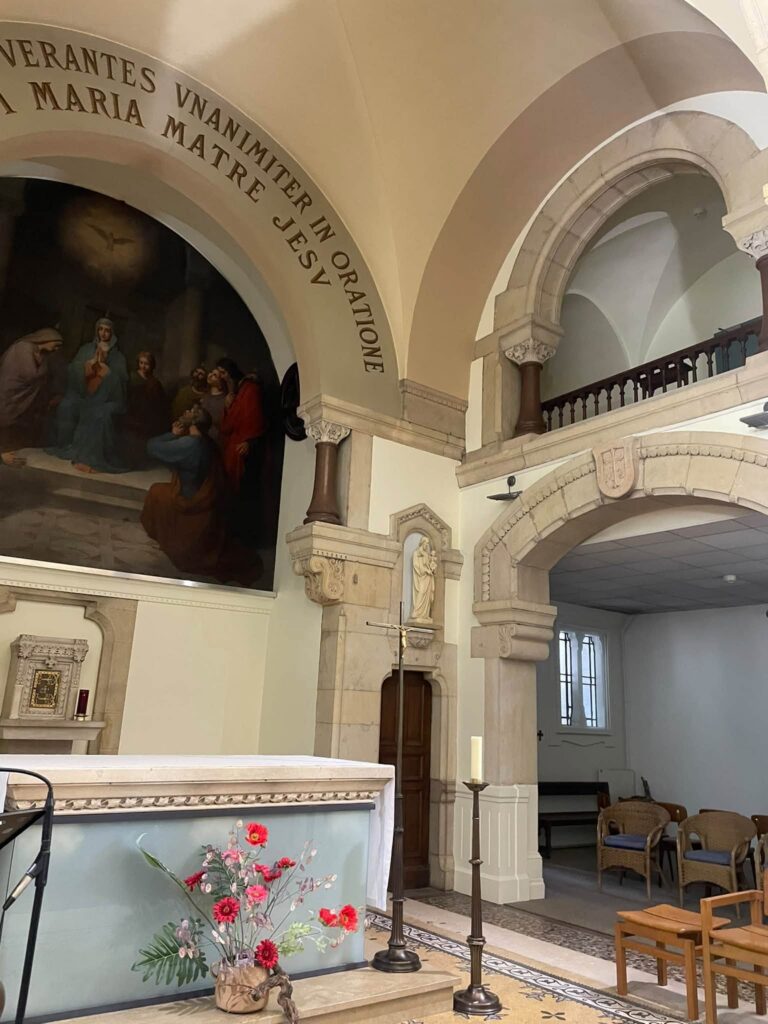
Why is TODAY the Feast of the Cenacle? It looks like a rather non-significant day when nothing happens in the world and in the Church. And the date even changes each year! The Resurrection is finished, Jesus has gone up to heaven, and the Holy Spirit has not yet come. There is, however, the “upper room,” also called “Cenacle.” It looks like a very important part of the “charism” of the Cenacle. If we take a look at the readings for today’s feast, we hear first Ezekiel, who makes a marvelous promise in the name of God: “I will give you a new heart, I will put a new spirit into you, I will be your God.” But a promise remains a promise: it gives hope, which is good, but it is only really good when the promise does happen. And suddenly, with the 2nd reading, we find ourselves in the Acts of the Apostles, and this time, the promise comes from Jesus himself: “You shall receive power when the Holy Spirit shall come upon you: and you shall be my witnesses in Jerusalem (…) and to the ends of the earth.” Another promise, but it sounds more urgent, so “they returned to Jerusalem and they went to the upper room, where they were staying.” And there, they did nothing but “with one accord, devoted themselves to prayer, together with the women and Mary the mother of Jesus and his brothers.” (Remember, the “upper room” is the Cenacle). With the recent liturgical changes in most parts of the Church, Pentecost is tomorrow, so the promise will soon come true and the mission will begin, with Mary in the very middle of it. From the Cenacle to the Mission. What does the Gospel add to this waiting in hope? What does Jesus say in his final prayer to the Father with his friends? Just before today’s Gospel, Jesus tells his Father something like, “I’ve done my job: they know now that all you have given me comes from you, and that the words I gave to them are the very words that You gave me.” He is the Word, and they know it. Then a few lines later, in today’s gospel, we hear: “May they be one as we are one. Now I am coming to you, and I am saying these things in the world that they may have the fullness of my joy in themselves. Sanctify them in truth; your word is truth. As you sent me into the world, so I send them into the world. And I give my life for them so that they may also be sanctified by the truth.” Before the sending for mission, we have the “sanctify them in truth, in your word.” (Two days ago, in Harvard, without quoting Jesus, Tom Hanks proclaimed loudly: “Truth is sacred.”) We have here two possible translations of one Greek world: “hagiazo,” to sanctify or to consecrate, and the meaning of that Greek word is something like, to enter gradually and totally into the life of God. From this Gospel, the meaning we have is that the mission is not first but second, it comes from this inner gift promised by Ezechiel of God’s Spirit being with us, and inviting us to be with Him. This is why they are in the Cenacle, one in prayer before they will be sent for the Mission, waiting for the Gift of the Spirit so that the Mission will truly be God’s Mission. And here, I think we meet Mother Therese on something that was very important for her, but that is very hard to translate into English. The Cenacle Constitutions rightly say: this feast today “celebrates the mystery of prayerful expectation and waiting in retreat with Mary by the first assembly of the Church, directed to that outpouring of the Spirit which sent the apostles to the ends of the earth.” And they add: « We give witness to a good God, after our foundress who said that “God is good, even more than good, He is Goodness: Dieu est la Bonté même.” Your Holy Foundress also said: « The great means to enter the way of holiness is ‘se livrer’ to our good God,” adding: “Make the experience of it and you will see that it is the true happiness that we would seek in vain without it.” Is this not the Gospel of today, sanctification in truth? The only problem is the question that Saint Thérèse poses herself: “What does this mean, “se livrer”?” She admits, however, that “I understand the spaciousness of this word but I cannot explain it. It embraces present and future, it is more than to devote oneself or to give oneself, even more than to abandon oneself to God.” Wow, what does she really mean by this famous untranslatable French word? She tries her best to explain it: “It is to die to everything and to oneself, no longer to busy oneself with the self, except to hold the self always turned toward God. It is not to seek oneself in anything, neither for the temporal nor for the spiritual. No longer to seek our personal holiness, but only the good pleasure of God.” And she adds: “It is a spirit of detachment that does not hold on to anything, neither to people, to things, to time, to places. It is to accept all, to subject oneself to all.” Only the good pleasure of God… She explains further that it might look very difficult, but she insists: “There is nothing as easy to do as this. It only consists in making once only a generous act, saying in all sincerity: My God, I want to belong to you, accept my offering, and all is said. However, we need to remember that we have “given ourself.” And Mother Thérèse concludes: “If we could understand beforehand the sweetness and the peace that we feel when we do not put any restriction with
Abram, Moses, Elijah, & Jesus had something in common other than being four of salvation history’s greatest prophets. They all had to make a departure. Abram left Ur to some new land he was clueless about. Moses left the pasture for Egypt, to challenge, of all people, Pharaoh. Elijah bolted Israel & hid in a cave to escape from Jezebel (the evil queen, not the mermaid!) Jesus? He departed, too. Twice, in fact, & with both eyes open. He left the carpenter’s life. Then, he left this life, & in a quite gruesome, terrifying way. Ever notice, sisters & brothers, any important transformation, any significant growth is often preceded by a departure? Departure may be geographical: a student leaves for college, a mother flies to be OFW, a probinsyanomoves to the city for seminary/convent. The departure may also be psychological: a user enters rehab, the troubled braves psychotherapy, a fiancée embraces another religion, a parent accepts terminal illness. And they are all transfigured. The most immediate examples of departure & transfiguration are you & I. We wouldn’t have become who & what we are now if we didn’t “go away.” Departure transfigures us. Leave-taking changes us. Kaya nga we have this funny expression: “hindi maka-move-on.” One who barely departs barely transfigures. Worse, applying the third law of thermodynamics which I learned from Fr Jett: one who remains the same also transfigures, yes, but for the worse. In a word, entropy. Two years before they killed him, Jesus of Nazareth departed from home to become healer. He was done fixing things. From now on, he’d be fixing people. He departed from powerless to powerful. So, from the day he left his mom, he took as maaaany people with him on the journey…from powerless to powerful, too! He transfigured them from ill to well, from dead to breathing, from sinner to humbled. But his first departure wasn’t without risks. He earned enemies now, not just friends, met really nasty people now, not just good. He also filled with rage now, something he never thought he was capable of feeling; far from the serenity he’d always been familiar with. And boy, did he feel exhausted! Not even a storm mid-lake could wake him up! Iba pala ‘yung pagod ng pagpapanday ng gamit d’un sa pagod ng pagkukumpuni ng buhay. Jesus could’ve stayed on Mt. Tabor if he wanted to, & revel in his power the rest of the time. After all, he had already transfigured many lives on this first departure. If you’ve been to Mt. Tabor, you wouldn’t blame Peter for not wanting to move on & just stay up there. To this day, sisters & brothers, it’s a beautiful place! But Jesus wasn’t done w/ departures just yet. The second & last had to be made: the departure from powerful to powerless. May mga parinig na siya nitong nagdaang mga araw. Dying, he suggested, was as redemptive as living. Just as people were saved by his life, they’d also be saved by his death. Pero walang explanation, in any rational, algebraic way for his friends to entirely understand: “save by living, save by dying.” In his heart of hearts & only in there, Jesus knew that departing from powerful to powerless would also transfigure not only Judaism, but all humanity. It really works the same way with us, you know. When we use the power & glory God has given us in order to precisely part with it when it is time, then truly have we been transfigured into the image & likeness of God’s Son, with whom the Father is well pleased. We see it only too often, sisters & brothers; people who refuse to make the second departure from powerful to powerless. Already borne by God to “somebody” from “nobody,” elevated by God to “richly blessed” from “dirt poor,” lifted by God from beggar to fund-raiser, the Scarlet O’Hara’s (or if you wish, the Imeldifics), they cry (& I quote from Gone with the Wind): “As God is my witness…I’ll never be hungry again, nor any of my folk. If I have to lie, steal, cheat, or kill, as God is my witness, I’ll never be hungry again.” Among the lay as well as among the religious are those who can’t & wont’ make that second departure despite God’s clearest, most insistent call. They’re transfigured, too, I guess, but per the 3rd thermodynamics law. They often become imperious & machiavellian, self-indulgent & self-referential, divisive & destructive—all personified by the hierarchs of Jesus’ day. Jesus’ show-&-tell remains true, sisters & brothers. Depart & be transfigured. Descend & be raised. But cling & grasp? We crash & burn. “But Jesus came and touched them, saying, ‘Rise, and do not be afraid.’” That’s the assurance we all need, sisters & brothers; rise & be not afraid, because the second departure from powerful to powerless can be quite terrifying. But rise, Jesus says, & be not afraid. And we can trust him because he died in utter powerlessness, yes. But now he’s forever risen in power & glory untold. Depart & be transfigured. Descend & be raised. And so we pray the words of today’s Psalm: “Lord, let your mercy be on us as we place our trust in you.” Homily delivered by Fr Arnel Aquino, SJ on 4 March 2023 Anticipated Sunday Mass on the Second Sunday of Lent Cenacle Retreat House
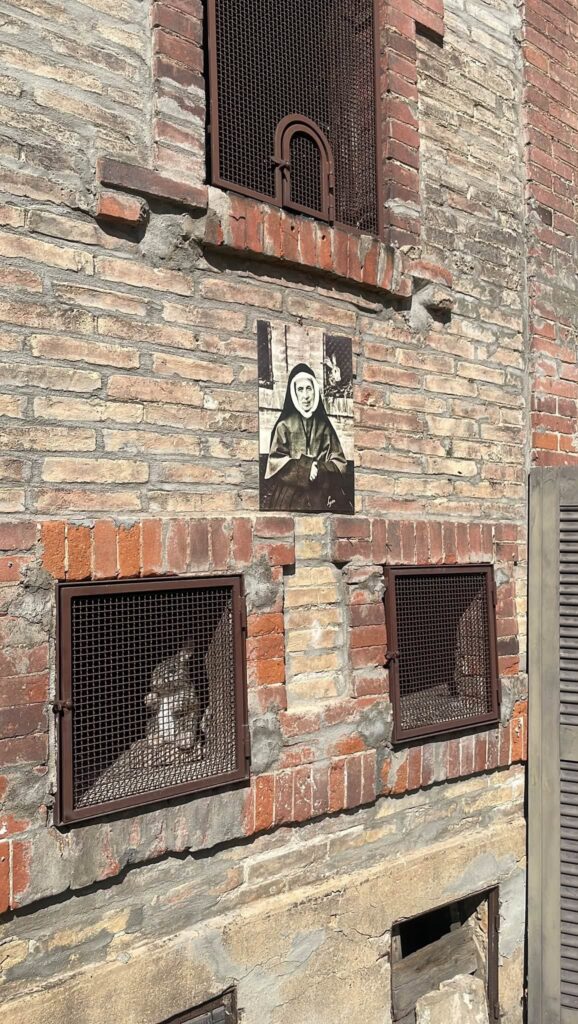
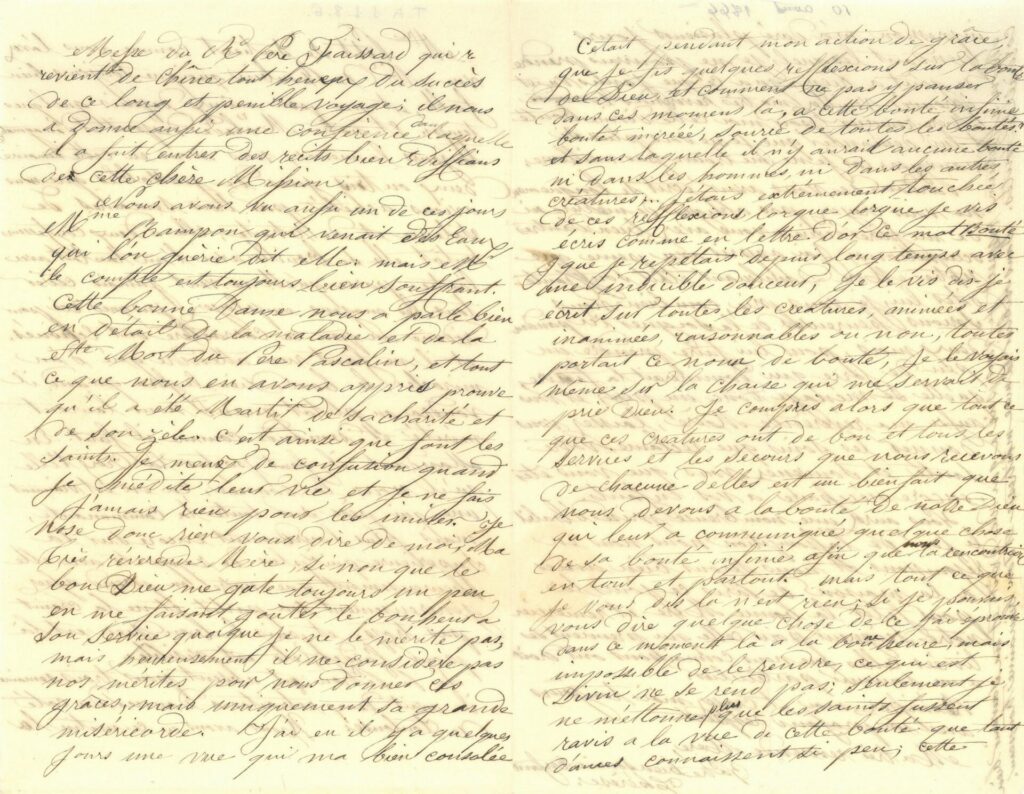
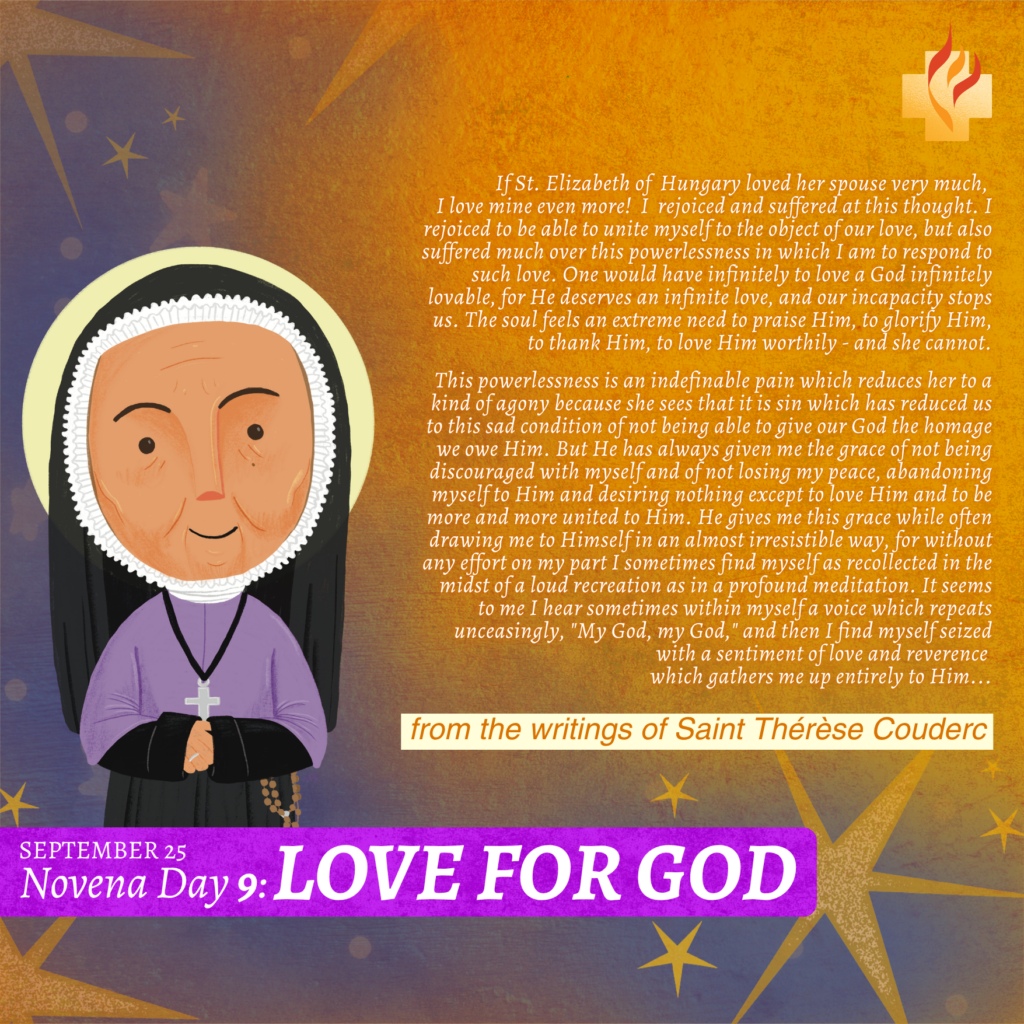
The story of St Thérése Couderc which the Cenacle sisters know by heart is a revenge in the end of God’s infinite goodness. She went through so many humiliations in life often caused by ecclesiastical authorities and her companions in the congregation – people who invoke the name of Jesus! After a rather rosy start of her religious life, one thing led to another: the death of Fr Terme, her co-founder of the congregation; the split between the Sisters of Saint Regis and the Religious of the Cenacle; the financial woes following the failed promise of a lady to cover the built chapel after her family opposed the donation; then a law suit ensued but the sisters lost the case, and Thérèse as the Superior General was blamed by her companions for all the mess. The tragedies did not end here. A string of bad calls followed. The Bishop appointed a novice who was a wealthy widow to replace her. This was a disaster, and thank God, it was short-lived, and the new superior had to be replaced. It is said the Jesuit advisers replaced her “with a succession of wealthy women.” A Jesuit provincial was involved in the appointment of Mother Contenet as Superior General. She made bad decisions like sending away experienced sisters from the community for unknown reasons so that only Thérèse and another older nun were left in the convent. She was restricted from giving retreats, a ministry she so loved doing. The novices were made to believe that Mother Contenet was the foundress of the congregation, and not Thérèse. It all seemed like an attempt to isolate her and get rid of her influence in the congregation. In the meantime, Thérèse continued her labors in obscurity, but at some point, she was made superior for a short time in Paris and Tournon. It would have been tempting for her to fight back and resist the marginalization, but she took the path of Jesus to Calvary. After the superiors who were against her had died, her true place in the congregation was restored as her life, writings and reflections showed the depth of her spirituality and holiness. In the Gospel, Jesus says: “unless the grain of wheat falls to the earth and dies, it remains alone; but if it dies, it bears much fruit.” This is the life of Thérèse, a progressive dying to self so that others, her congregation, and those she accompanied may live. It is a complete and prophetic participation in the paschal mystery of Christ. In her well-known writing, she says: “To surrender oneself is to die to everything and to self, to be no longer concerned with self except to keep it continually turned towards God.” This is not just an ideal for her. She lived it to the full. Fr Adolfo Nicolás says that classic saints have something in common, that is, they all have a capacity to give themselves totally and absolutely to God. Saints like Teresa of Avila, John of the Cross, Ignatius of Loyola, Francis Xavier and so many others are so focused and centered on God and the mission entrusted to them. Thérèse likewise belongs to the list of classic saints mentioned by Fr Nico. She had a singleness of vision. She was completely focused on God and the mission of leading people to the goodness of Lord through spiritual accompaniment and retreat giving. There is no trace of egoism in her even amid humiliations. The grace that sustained her is not sheer will power nor human effort. It is the infinite goodness of God that kept her going. It is the same graciousness of God that the Lord speaks to Moses in the first reading: “I will be gracious to whom I will be gracious and will show mercy on whom I will show mercy.” Thérèse speaks of the same goodness of God: “without which there would be no goodness, neither in people nor in other creatures.” We encounter the goodness of God in everything and in everywhere. In our world where distractions, disappointments and distressing moments abound and at times triggered by companions and well-meaning people, St Thérèse could be our inspiration and courage. The goodness of God may seem absent or defeated, but it is there. It surfaces and resurfaces, not always in our own terms, but in God’s. St Thérèse Couderc, pray for us. Homily of Fr. Antonio (Tony) Moreno, SJ on the Feast Day Mass of Saint Thérèse Couderc 26 September 2022 Cenacle Retreat House
A Cenacle program designed for religious formators at all levels of formation. We have received some requests for a program designed to help religious formators in the spiritual accompaniment of their formands. We would like to know if you are interested in such a program and what you feel about it. This program will not be an accrediting training program. Rather, it hopes to provide important perspectives in spiritual accompaniment in the context of formation to enable the formator to help the formands grow and develop holistically. The Religious of the Our Lady of the Cenacle is an international congregation that is missioned to the awakening and deepening of faith with and for the people of our time through the ministry of retreat, spiritual direction, values formation, human development and other spiritual ministries. For more information kindly check our website: http://www.cenaclephilsing.org If you are interested, we hope to receive your SURVEY on or before 31 December 2021. For further inquiries, you may reach us at SMS/Whatsapp/Viber: +639177108092 and cenacle.philippines@gmail.com. Thank you!
Do you feel a natural connection or a sense of peace in the company of Religious? Do their vocation stories move you? Are you able to recognise the Love of God in your life and a deep desire to want to give yourself more? Can God call us through things that we like? To enter Religious Life, do I really have to give up , enter into a lonely place and “sacrifice” in order to follow God? What if my personality ‘doesn’t fit’? Will I be happy and free to be myself in Religious Life? In this radio interview with Radyo Katipunan 87.9FM, on Jun 11 2019, Sr. Yna Oñate, rc speaks about the gifts of the Cenacle, her vocation discernment process and experience of God’s Goodness that offers her the possibility of giving herself fully as a response to this great love. Currently based in Macau, she lives her religious life and ministry through constant surrendering of self as she accompanies others in human and faith formation. https://www.facebook.com/radyokatipunan/videos/454989105276383/ Interview begins on 7:19